

In Ziro, rice and fish grow in the same flooded field at the same time. The Apatani people worked out this paddy-cum-pisciculture system generations ago, without machines or draft animals, and it is still considered one of the most sophisticated traditional hill-farming methods anywhere in the world. That single detail tells you what this Ziro Valley travel guide is really about: not just pretty green terraces, but a living culture that farms them.
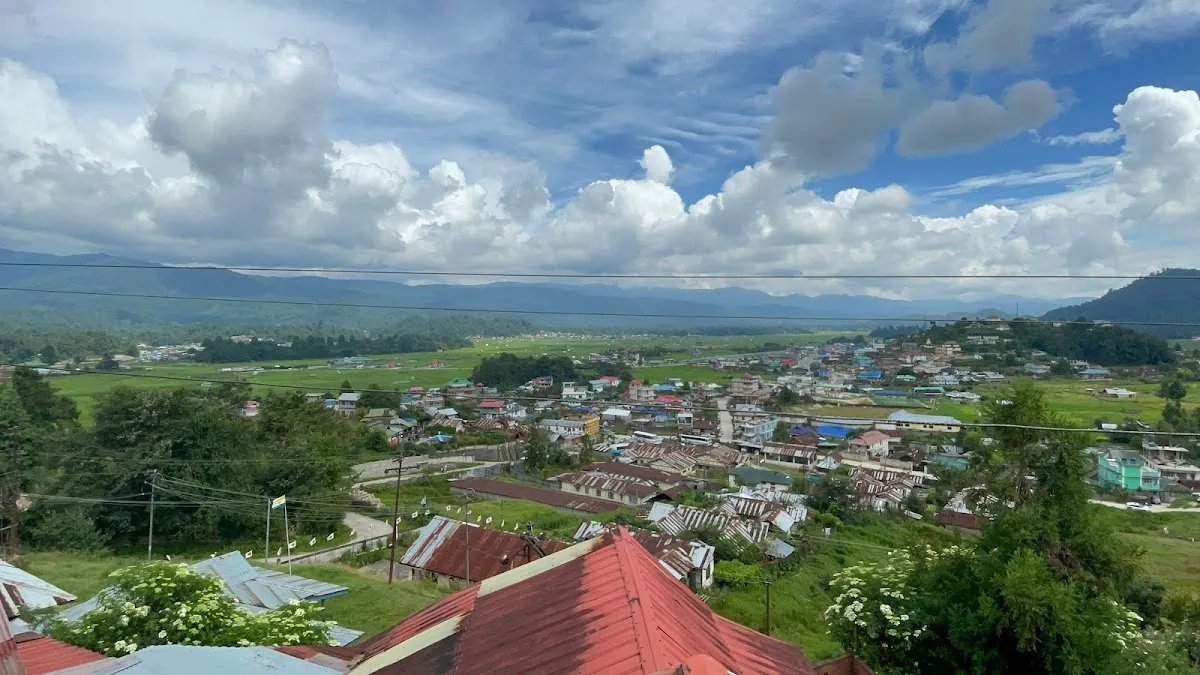
Ziro sits in the Lower Subansiri district of Arunachal Pradesh, a gentle bowl of paddy fields and pine ridges at around 5,500 feet, surrounded by the steeper Eastern Himalayas. It is calmer and easier than Tawang, and it has become the unlikely home of India’s best-known outdoor music festival. Axomor has catalogued 250+ places across Northeast India, and Ziro is the one we send people to when they want culture and quiet over high-altitude drama.
Permits for Ziro
Indian citizens need an Inner Line Permit (ILP). Apply on the official portal arunachalilp.com, and watch out for copycat third-party sites. The government fee is around Rs 100 per person, with a tourist permit commonly valid for 15 days and extendable, though some circuit permits run 30 days and cover Tawang, Ziro, Itanagar and more. Carry a government photo ID and a passport photo. The entry gate for the Ziro side is Kimin.
Foreign nationals need a Protected Area Permit (PAP), roughly USD 30 to 50 per person, valid 30 days and non-extendable, applied through a registered local operator at least a week ahead. Solo foreign travellers are now generally allowed for Ziro, Tawang and Bomdila specifically, where the old two-person rule has relaxed.
A Note on the UNESCO Status
You will see Ziro described all over the internet as a “UNESCO World Heritage Site.” That is not accurate, and it is worth getting right. The Apatani Cultural Landscape is on UNESCO’s tentative list for World Heritage status, which means it has been submitted and is under consideration, not inscribed. The correct phrasing is “on UNESCO’s tentative list.” The distinction matters because the conservation effort around it is ongoing, and overstating it does the place no favours.
The Apatani: Meet the People First
Ziro is Apatani country, and understanding the community is the point of coming here. Beyond the rice-and-fish fields, the Apatani are known for two things travellers often photograph without context.
The first is the elder women’s facial tattoos and large cane nose plugs (yaping hullo). The widely-told origin is that the markings were meant to make Apatani women look less attractive to raiders from neighbouring tribes who might abduct them. The practice was discontinued around the 1970s, so only elderly women carry it today, and younger generations do not. These women are revered community elders, not photo props. Always ask before photographing anyone, and never shoot rituals uninvited. Some elders expect a small contribution, which is fair.
The main villages to visit are Hong, Hari, Hija, Bamin-Michi and Dutta. Hong is often described as among the largest villages in Asia, a claim that is repeated everywhere and hard to verify, so treat it as folklore rather than fact. Hong and Hari are the easiest to explore, with bamboo houses, communal architecture, and the village councils (bulyañ) that still govern local life.
Top Things to Do in Ziro
- Ziro Valley and the paddy fields: walk the bunds between flooded plots, especially when the fields are emerald in the growing season.
- Talley Valley Wildlife Sanctuary: a trek through dense silver-fir, pine and bamboo forest at around 2,400 metres, rich in orchids and clear streams. It ranges from a long day hike to a multi-day trek.
- Kile Pakho ridge: a panoramic viewpoint with the Ziro plateau on one side and the snow-capped Eastern Himalayas on the other.
- Meghna Cave Temple: a short trek to a cave shrine.
- Seeh Lake at Biirii and the pine groves: quiet picnic-and-photo spots around Old Ziro.
- Tarin Fish Farm: a government farm that shows the carp cultivation behind the famous fields.
The Ziro Music Festival
The Ziro Festival of Music is India’s premier outdoor indie festival, set among the rice fields and pine hills on bamboo stages, with an eco-conscious ethos and a lineup spanning indie, rock, folk, electronic and blues. It has grown past 10,000 attendees.
The 2026 edition runs 24 to 27 September. Buy tickets only through the official site, zirofestival.com. Recent pricing put day passes from around Rs 3,100 and a four-day pass near Rs 9,000, sold in phases with early-bird tiers, plus festival-run camping packages. Lineups and exact tiers are released in stages, so confirm on the official site close to the dates. Book accommodation far ahead for festival week, when the valley fills and prices spike.
How to Reach Ziro
The nearest railhead is Naharlagun, near Itanagar, about 100 km and 3 hours from Ziro by shared taxi, with the overnight Donyi Polo Express running from Guwahati. The closest airport is the new Donyi Polo Airport at Hollongi (Itanagar), opened in November 2022, roughly a four-hour drive away; Lilabari in Assam is the older alternative.
From Itanagar the drive is around 115 km and 4 to 5 hours, though sources quote the distance anywhere from 116 to 167 km depending on the start point. One current caveat: the NH 415 approach corridor around Itanagar is still under four-laning construction and behind schedule, so expect rough, dusty, slow stretches near the city. From Guwahati it is roughly 450 km and 9 to 10 hours, with an APSRTC night bus running several days a week.
Best Time to Visit Ziro
- September to October: the sweet spot. Post-monsoon clarity, green-to-gold fields, and the music festival in late September.
- March to May: spring greenery without monsoon risk, fewer crowds.
- June to August: the brightest emerald fields during paddy planting, but landslides and roadblocks are likely. Accessibility is the trade-off.
- December to February: cold and quiet.
In short, come in late September and October for the festival and the most photogenic fields, or March to May for easy spring travel.
Where to Stay
Stay in an Apatani village homestay rather than a town hotel. Homes in Hong, Hari and Biirii run roughly Rs 800 to 2,000 a night, often including a home-cooked breakfast and dinner, with around Rs 1,500 per person per day a fair benchmark with meals. Boutique eco-homestays such as Ngunu Ziro, in traditional bamboo houses, sit higher at Rs 3,500 to 4,500. Many use solar power, rainwater harvesting and organic farming. Book far ahead for festival week.
Practical Notes Most Guides Skip
- Network is patchy and drops badly at night and under festival crowds. Carry offline maps and do not count on data.
- ATMs are few and often empty, and cards or UPI fail under peak network load. Cash is king here, especially during the festival. Withdraw in Itanagar or Naharlagun before heading up.
- Try apong, the traditional home-brewed Apatani rice beer, offered in a homestay rather than bought commercially. Local kiwi and apple wines are also worth a taste.
- Travel responsibly. Support village homestays and local cane and bamboo crafts directly, avoid plastic on the Talley Valley trek, and respect sacred groves and council norms.
Plan Your Ziro Trip with Axomor
Ziro pairs well with Itanagar and a wider Arunachal route, and it is an easier first taste of the state than the high passes. For the full picture, read our guide to the best places to visit in Arunachal Pradesh, and sort your paperwork with the ILP guide for Arunachal Pradesh. Browse all Arunachal Pradesh destinations on Axomor.
Come for the festival or the fields, but stay for the people. Ziro is one of the few places where the landscape and the culture that made it are still inseparable.
Ready to plan this trip?
Use Axomor's free trip planner to build your custom Northeast India itinerary, with distances, permits, and the best time to visit each spot.