
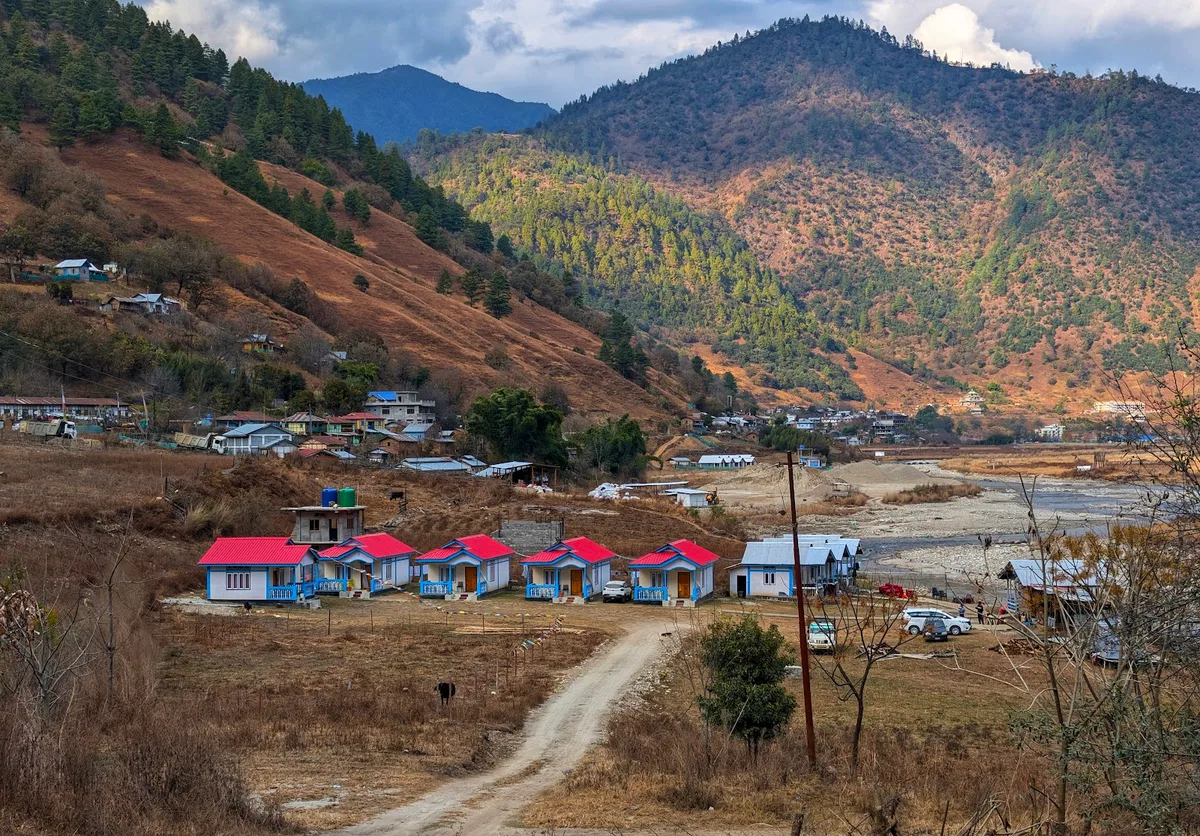
The question gets asked constantly, and it usually comes loaded with a reputation the region acquired decades ago. So here is the direct answer: for the routes most visitors take, Northeast India is as safe as anywhere else in the country, and in some respects safer. Meghalaya, Assam’s tourist circuit, Sikkim, Nagaland and Arunachal Pradesh see a steady flow of Indian and foreign travellers who have entirely uneventful trips.
But asking is northeast india safe as one question about eight states is like asking whether Europe is safe. The honest answer varies by state, and the real risks for a visitor are almost never the ones they arrive worrying about. Road conditions, altitude and weather will affect your trip. Political trouble almost certainly will not.
Axomor covers 250+ places across the region and this guide is written for people deciding whether to book.
The Reputation and the Reality
Parts of the Northeast saw prolonged insurgency from the 1960s through the 2000s. That history is real, and it produced travel restrictions, a heavy security presence, and a reputation in the rest of India that has outlived the conditions that created it.
Most of the region has changed substantially since. Sikkim consistently ranks among India’s safest and cleanest states. Mizoram and Meghalaya have low violent crime. Nagaland’s Hornbill Festival draws tens of thousands of visitors including large numbers of foreign nationals every December.
What has not changed is that the situation is not uniform, and it can shift. That is why the advice below is specific rather than reassuring.
State by State
Assam. The tourist circuit of Guwahati, Kaziranga, Majuli and Jorhat is routine and well travelled. Normal city precautions in Guwahati apply as they would in any Indian city of two million people.
Meghalaya. Straightforward. No permit for Indians, high visitor numbers, and a well established tourism economy in Shillong, Sohra and Dawki. The main hazards are the roads and the weather.
Sikkim. Among the safest states in India by most measures. Low crime, good infrastructure, well regulated tourism. Altitude is a bigger concern here than anything else.
Nagaland. Kohima, Dimapur, Khonoma and the Hornbill circuit are well used by visitors. An ILP applies for Indian citizens outside Dimapur, which also means the state knows who is travelling where.
Arunachal Pradesh. The Tawang and Ziro routes are established tourist corridors. Border areas require permits and some are closed entirely. Follow the permit system and you will not stray anywhere you should not.
Tripura and Mizoram. Both quiet, both under visited, both with low crime. Limited tourist infrastructure is more of a practical issue than safety.
Manipur. This is the state that requires genuine care. Manipur has experienced serious ethnic conflict in recent years, with periods of curfew, internet shutdowns and restricted movement. The situation has fluctuated considerably and conditions in Imphal have differed from conditions in the hill districts. Check your government’s current travel advisory and local news before booking anything in Manipur, and be prepared to change plans. This is not a reason to write the state off permanently, but it is a reason to verify rather than assume.
For any state, check the current advisory from your own government before you travel, since these positions are updated as conditions change.
Solo Travel
Solo travel through the region is common and generally uncomplicated. Shared Sumos, homestays and a strong hospitality culture make it easier than many parts of India.
For solo women specifically, several things work in the region’s favour. Matrilineal social structures in Meghalaya, high female literacy and workforce participation across several states, and a general culture in which women moving around independently is unremarkable. Many solo female travellers report feeling more comfortable here than in North India.
That does not make it risk free. Practical points that matter more than platitudes:
- Travel between towns during daylight. This is about road conditions and breakdown risk as much as anything else.
- Book the first night’s accommodation in advance. Arriving in Shillong at 9:00 PM without a room is an avoidable problem.
- Shared Sumos are fine. They are packed, public and routine.
- Tell someone your route. Mobile coverage disappears for long stretches, and a check in schedule matters more here than in places where you can always call.
- Homestays over hotels in villages. You are in someone’s home with a family, which is usually the safer option in a small place.
The Risks That Are Actually Real
Roads
This is the genuine hazard. Mountain roads with blind corners, trucks, fog, unmarked drops and landslide zones. The Shillong to Dawki road has been under four laning work through 2026 with periodic closures, and a landslide in March 2026 halted traffic for about a week.
What to do about it: do not travel mountain roads after dark. Choose an experienced local driver over a cheap quote. Do not self drive in the hills unless you have done it before. Build a buffer day into any itinerary that crosses a high pass.
Altitude
Tawang sits at around 10,000 feet and the road there crosses Sela Pass at roughly 13,700 feet. Nathu La is over 14,000 feet. Gurudongmar in North Sikkim is higher still.
Acute mountain sickness is a real risk on these routes, and it does not care how fit you are. Headache, nausea, breathlessness and disturbed sleep are the early signs. Ascend gradually, spend a night at Dirang or Bomdila rather than driving Guwahati to Tawang in one push, drink water, avoid alcohol on ascent days, and descend if symptoms worsen. Anyone with heart or lung conditions should take medical advice before a high pass trip.
Weather and monsoon
June to September brings landslides to the hills and flooding to the Assam plains. Roads close, sometimes for days. Treks become genuinely dangerous, and the Nongriat descent in particular gets slippery and the river rises fast.
Connectivity
Mobile coverage is patchy and disappears entirely in North Sikkim, rural Arunachal, on the Dzukou trail and around Nongriat. Download offline maps. Carry a power bank. Do not rely on being able to call for help from a trail.
Health and Emergencies
Guwahati has the region’s best hospitals and is the referral centre for serious cases across several states. Shillong, Imphal, Gangtok, Dimapur and Agartala have district level facilities. Rural areas have primary health centres and little more.
Carry a basic kit: rehydration salts, painkillers, antiseptic, any personal medication in sufficient quantity, and a strip of something for stomach upsets. Malaria and dengue exist in the lowlands, so use repellent in the plains and in the parks.
National emergency number: 112. Police: 100. Ambulance: 108. Save your accommodation’s number, and note that in a genuine emergency in a remote area, your homestay host is a more useful contact than any hotline.
Cultural Etiquette
Getting this right matters more here than in most of India, because you are often in villages where visitors are still a novelty rather than an industry.
- Ask before photographing people. Especially in Naga villages, at festivals, and around elders. A refusal is a refusal.
- Village entry protocols exist. Some villages have gates, customs and entry fees. Respect them, and use a local guide where one is expected.
- Dry states and areas. Nagaland has prohibition, and enforcement varies. Mizoram has had varying rules. Several villages are dry by community decision.
- Churches matter. Nagaland, Mizoram and Meghalaya are majority Christian. Sunday is genuinely observed, shops close, and services are not tourist attractions.
- Sacred groves and monasteries. Remove shoes, do not point feet at altars, do not photograph where signs say not to.
- Do not call it “the Northeast” as if it were one culture. The region holds over 200 distinct ethnic groups and hundreds of languages. Ask people where they are from rather than assuming.
Common Sense That Still Applies
Standard travel precautions have not been suspended because the region is friendly. Keep valuables secure in crowded markets, use registered taxis or app cabs in cities, do not leave bags in vehicles, keep digital copies of your ID and permits, and avoid political gatherings or demonstrations.
Best Time to Visit for a Safe Trip
October to April keeps you clear of the monsoon hazards entirely, which removes the single largest category of real risk. Within that window, November to February gives the most reliable road conditions, with the caveat that high passes can close for snow. Full seasonal detail is in the best time to visit Northeast India guide.
Plan a Safe Trip with Axomor
Every place page on Axomor lists permit requirements, opening hours and drive times from the nearest hub, which lets you plan routes that do not involve arriving somewhere remote after dark. Browse all Meghalaya destinations, all Sikkim destinations or all Nagaland destinations.
So, is northeast india safe? For the standard routes, yes, with the ordinary caution any travel deserves and specific attention to roads and altitude. Verify the current position on Manipur before booking, check your government’s advisory, and then plan the trip. Our 7, 10 and 14 day itinerary guide sets out routes that keep the driving sensible.
Ready to plan this trip?
Use Axomor's free trip planner to build your custom Northeast India itinerary, with distances, permits, and the best time to visit each spot.