

Sikkim is smaller than most Indian cities by area, yet it holds more landscapes per square kilometre than almost anywhere in the country. Within a few hours of driving, you move from subtropical forests through rhododendron-covered hillsides to high-altitude deserts pressing up against the Chinese border. The best places to visit in Sikkim span every terrain: busy monastery towns, glacial lakes at 17,000 feet, colonial tea gardens, and quiet West Sikkim villages with views of Kanchenjunga.
Axomor has mapped over 40 places across Sikkim’s four districts. This guide covers what is actually worth your time, with current entry fees, permit requirements, and honest advice on when to go.
The Best Places to Visit in Sikkim
1. Gangtok: The Base for Everything
Gangtok is where almost every Sikkim trip begins and returns to. The capital sits at around 1,650 metres and acts as the logistics centre for the whole state: permits are arranged here, shared cabs depart from here, and the main taxi unions that cover North Sikkim operate out of the city.
MG Marg (the pedestrianised main street) is lively in the evenings with cafes, street food stalls, and live music spilling out of a few basement venues. It is not a quiet hill town. But it earns its place as a base because nothing about Gangtok requires much effort: the Rumtek Monastery is 24 km away and contains one of the most significant collections of Kagyu Buddhist artefacts in the world; Enchey Monastery sits on a ridge above the city with panoramic views; Banjhakri Falls is 8 km out and makes a good half-morning trip.
No permit needed for Gangtok and its immediate surroundings (Indians or foreigners).
2. Tsomgo Lake (Changu Lake): 40 km from Gangtok
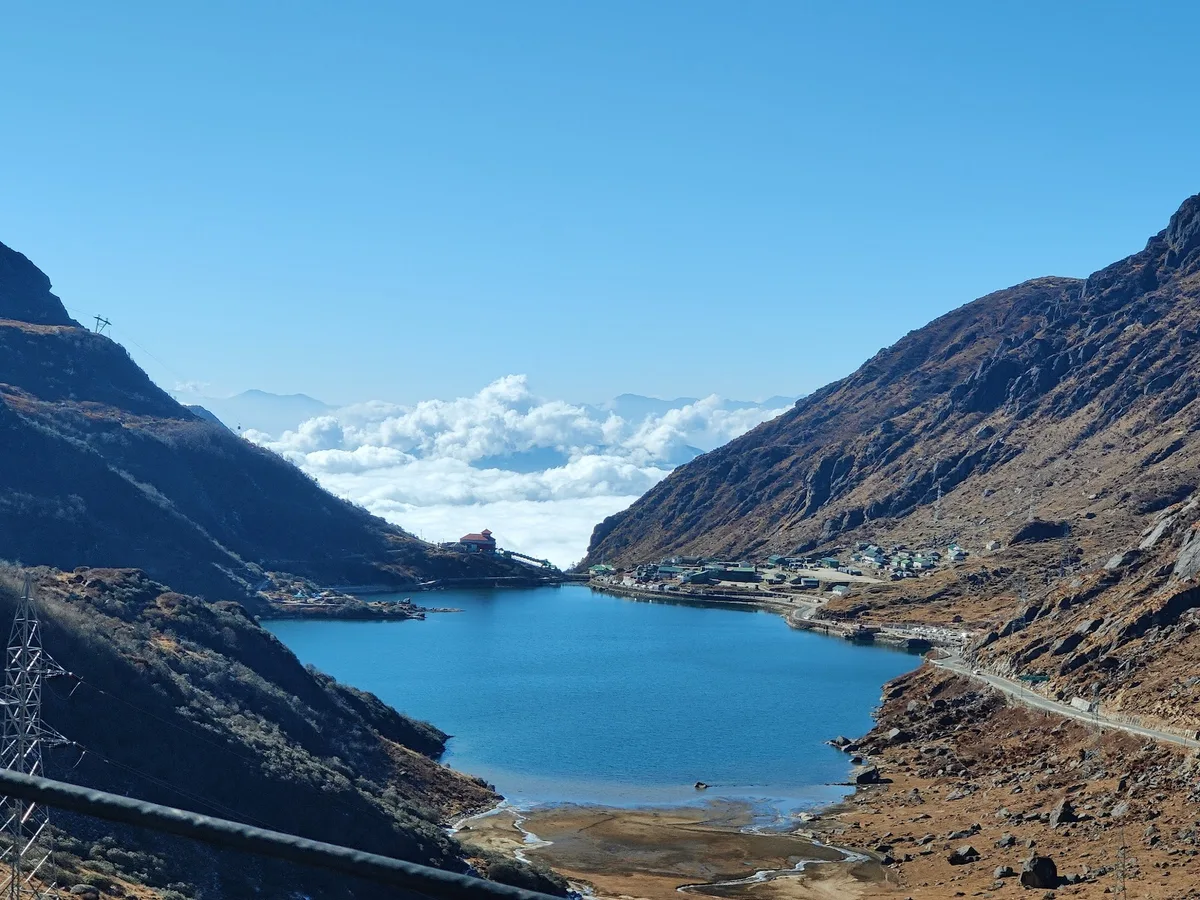
Tsomgo Lake is a glacial lake at 12,400 feet, 40 km east of Gangtok on the road toward Nathu La. The water is a deep blue-green in clear weather and completely frozen over between December and February. Yak rides are available at the lake shore, and the surrounding hillside turns vivid in spring when primulas bloom across the slope.
The permit fee is around Rs 200-300 per person, paid at the checkpost. You cannot drive yourself here. Shared jeep tours from Gangtok combine Tsomgo with Baba Mandir and optionally Nathu La, running Rs 800-1,000 per person for the combined trip.
- Best time: March-May (flowers) or October-November (clear skies, golden hillsides)
- Distance from Gangtok: 40 km, about 1.5 hours by road
- Permit: PAP (Protected Area Permit), arranged through your hotel or tour operator
3. Nathu La Pass: The China Border at 14,140 ft
Nathu La Pass is one of three open trading border posts between India and China. This was an ancient Silk Road crossing. Indian and Chinese soldiers stand face to face at the gate, and on trade days, trucks move goods across the border under formal protocols.
The altitude hits hard on the drive up; most people feel the breathlessness well before reaching the gate. The snowfields along the road from Tsomgo to Nathu La are spectacular even in summer.
- Open: Wednesday to Sunday only (closed Monday and Tuesday)
- Entry fee: Around Rs 200 per person permit fee
- Distance from Gangtok: 54 km
- Altitude: 14,140 feet (4,310 metres)
- Permit: PAP required; foreigners can NOT visit Nathu La
- Note: The pass closes entirely during heavy snowfall, typically December through February
4. Yumthang Valley and Zero Point: North Sikkim’s Crown
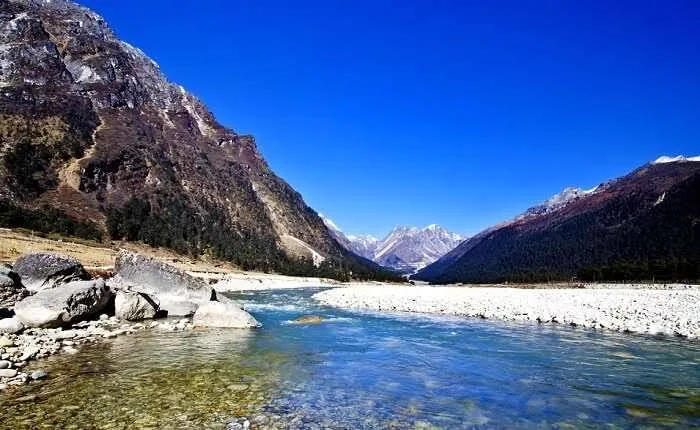
The drive from Gangtok to Lachung takes 4-5 hours and climbs through terraced hillsides, waterfalls, and the Teesta River gorge. Lachung is the overnight base for Yumthang.
Yumthang Valley (3,564 metres) is the Shingba Rhododendron Sanctuary. In April and May, the valley floor turns pink, red, orange, and white as multiple species of rhododendron bloom in succession. Outside this window, it is still dramatic terrain, but the bloom is what draws most people.
Zero Point (Yumesamdong) sits 25 km beyond Yumthang at 4,600 metres. Snow covers the ground most of the year, and the landscape is stark: bare rock and ice. Shared jeeps cover Zero Point from Lachung for around Rs 3,500 per vehicle.
- Best time for flowers: April to mid-May
- Open year round: Yumthang; Zero Point closes in heavy snowfall
- Note for foreign nationals: Zero Point is restricted to Indian citizens only
- Permit: North Sikkim PAP required; must book through a registered tour operator in Gangtok
5. Gurudongmar Lake: One of the Highest Lakes in the World
Gurudongmar Lake sits at over 17,000 feet in North Sikkim near the Tibetan border. The water stays turquoise through summer and the surrounding terrain has an emptiness that is unlike anything at lower altitudes in Northeast India.
This is accessed from Lachen, not Lachung: the two villages are on different routes. Most North Sikkim packages cover both (Gurudongmar from Lachen, Yumthang from Lachung) over 3-4 days.
- Altitude: 17,000+ feet (5,430 metres)
- Important: Indian nationals only. Foreign tourists are prohibited due to proximity to the international border
- Permit: North Sikkim PAP (through registered tour operator)
- Best time: May to October (frozen and largely inaccessible in winter)
6. Pelling: Kanchenjunga Views and West Sikkim’s Monasteries
Pelling is 130 km from Gangtok, a 4-hour drive through West Sikkim. On a clear morning, the view of Kanchenjunga from Pelling is worth the journey alone. The mountain fills the sky in a way that photographs cannot quite capture.
The main circuit from Pelling covers:
Pelling Skywalk: A glass-bottomed skywalk built into the cliff face above the Rimbi River gorge. Entry around Rs 50-100. Worth it for the views even if the glass floor is not your thing.
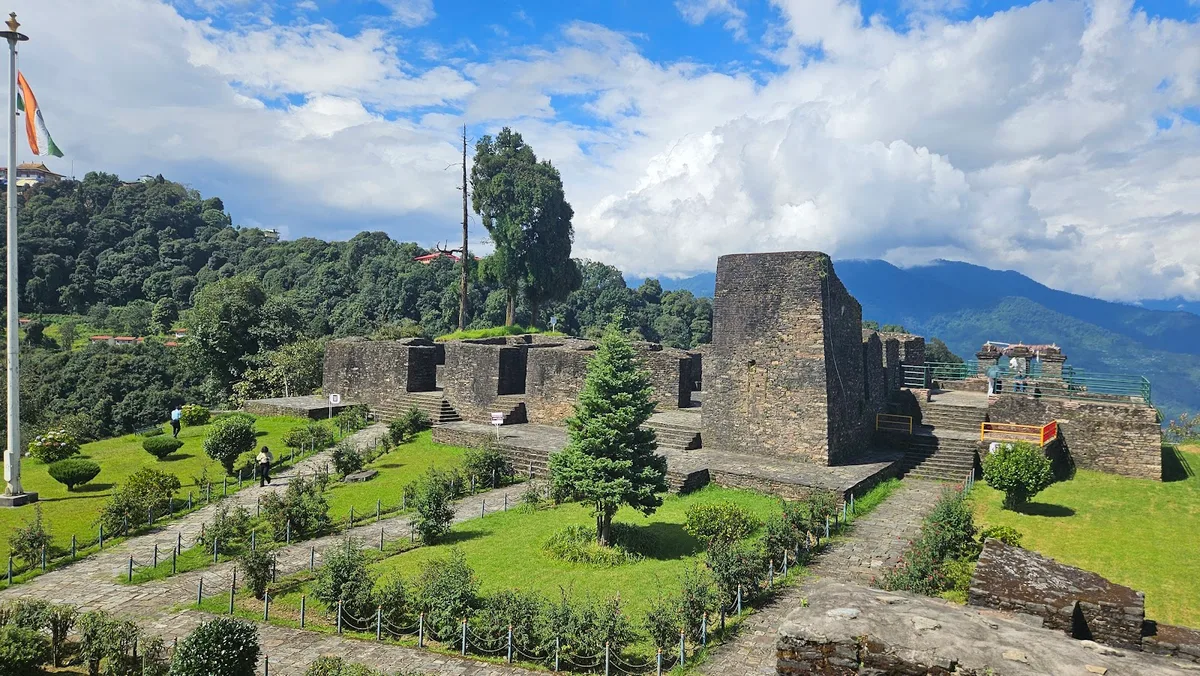
Rabdentse Ruins: The old capital of the Kingdom of Sikkim, a 20-minute walk through forest from Pemayangtse. Ceremonial platforms and ruins of the royal complex sit on a ridge with a long view toward Kanchenjunga.
Pemayangtse Monastery: One of the oldest monasteries in Sikkim and the senior monastery of the Nyingma school. The 7-tiered wooden model of Guru Rinpoche’s celestial palace inside is extraordinary; it took the head lama 5 years to build by hand.
Khecheopalri Lake: A sacred lake 28 km from Pelling considered wish-fulfilling by both Buddhists and Hindus. Remarkably quiet even during peak season. A short walk through forest to the water’s edge.
- No permit required for Pelling, Rabdentse, or Pemayangtse
- Best time: October-November or March-April for clear Kanchenjunga views
7. Ravangla and South Sikkim
Ravangla sits between Gangtok and Pelling at 2,150 metres, making it a natural mid-point stop. The Buddha Park (Tathagata Tsal) has a 130-foot bronze Buddha statue set in landscaped gardens above the valley. The Ralang Monastery complex nearby is one of the few places in Sikkim where you can watch monks in full puja without it feeling staged for tourism.
The Temi Tea Garden outside Ravangla is Sikkim’s only tea garden: organic, high-altitude, and producing one of India’s most exported teas. The garden is open to visitors and the walking paths through the tea terraces are good in the morning.
- No permit required
- Best time: October to December (clear skies, post-monsoon harvest season)
8. The Silk Route: Zuluk and East Sikkim
The old Silk Route through East Sikkim is Sikkim’s most undervisited circuit. The road climbs through 32 hairpin bends up to Zuluk (at 3,430 metres) and then to Nathang Valley and Jelep La. The views from the ridgeline stretch from Kanchenjunga to the Chumbi Valley in Tibet.
This route is open to Indians only and requires an Inner Line Permit (ILP), processed in Gangtok. Most visitors do it as a 2-day loop from Gangtok or as a stop between Gangtok and Pelling.
Best Time to Visit Sikkim
| Season | Months | What to Expect |
|---|---|---|
| Spring | March-May | Rhododendron bloom, Yumthang Valley peak, pleasant temperatures |
| Summer | June-August | Monsoon begins, some landslides on mountain roads, lush green |
| Autumn | Sep-Nov | Best overall: clear skies, festivals, Kanchenjunga visible, all routes open |
| Winter | Dec-Feb | Gangtok and Pelling fine; North Sikkim and Nathu La largely closed |
For rhododendrons and Yumthang: April to mid-May is the only window.
For Nathu La and Tsomgo: October-November gives the best road conditions and clear skies.
For Kanchenjunga views from Pelling: October-November, early morning.
For Gangtok snowfall: December-January, though snowfall in Gangtok itself is light and irregular.
Sikkim’s autumn season (September to November) is the strongest all-round choice. North Sikkim reopened to tourists in September 2025 after a brief closure, and the route to Lachen/Lachung/Yumthang is currently operational.
Permits for Sikkim: What You Actually Need
Most visitors are confused about permits. Here is the plain version:
No permit needed (for Indian nationals):
- Gangtok and East Sikkim (general areas)
- Pelling and West Sikkim (general areas)
- Ravangla and South Sikkim
- Rumtek Monastery
PAP (Protected Area Permit) required:
- Tsomgo Lake and Nathu La
- North Sikkim: Lachen, Lachung, Yumthang, Zero Point, Gurudongmar Lake
- Silk Route/Zuluk circuit (ILP)
How to get the PAP: Arrange it through a registered tour operator or your hotel in Gangtok. Bring two passport-size photos and a government-issued photo ID: Passport, Voter ID, or Driving License. Aadhar Card is not accepted for PAP applications. The Sikkim Tourism Department launched a digital permit system in 2025; ask your operator about online processing, which avoids the half-day wait at the permit office.
For foreign nationals: You can visit Gangtok, Pelling, Rumtek, and South Sikkim without a permit. For North Sikkim (Lachen, Lachung, Yumthang), you need ILP plus RAP (Restricted Area Permit). Nathu La, Zero Point, and Gurudongmar Lake are restricted to Indian nationals only.
How to Get to Sikkim
By Air: The honest advice here is to skip Pakyong Airport (PYG). It sits 31 km from Gangtok but has had no reliable commercial service since SpiceJet suspended routes in 2022-23. It operates on Visual Flight Rules only, which in a monsoon-heavy hill station means frequent cancellations. Fly into Bagdogra Airport (IXB) instead, 120-125 km from Gangtok and well connected from Kolkata, Delhi, Bangalore, and Mumbai.
By Rail: New Jalpaiguri (NJP) is the nearest major railway station, 163 km from Gangtok. Overnight trains from Kolkata (7-9 hours) and the Darjeeling Mail from Kolkata are the most convenient options. The station at Rangpo (Sikkim’s entry point) has limited connectivity.
By Road from NJP or Bagdogra: Shared jeeps from NJP to Gangtok run throughout the day for Rs 250-300 per person, taking 4-5 hours on NH10 through the Teesta valley. The road is scenic but can be slow after monsoon rains. Private cabs run Rs 3,000-4,000 for the same journey.
How to Plan Your Sikkim Trip
A 6-day route covers the main areas:
- Day 1: Arrive NJP or Bagdogra, drive to Gangtok
- Day 2: Gangtok city, Rumtek Monastery, Enchey Monastery, MG Marg
- Day 3: Tsomgo Lake and Nathu La day trip from Gangtok (arrange PAP day before)
- Day 4: Drive to Lachung (4-5 hours), check in
- Day 5: Yumthang Valley and Zero Point, return to Lachung or drive to Gangtok
- Day 6: Morning drive to Pelling, Rabdentse and Pemayangtse in the afternoon
For 8-10 days, add Lachen and Gurudongmar Lake before Lachung, and spend a full day in Pelling rather than passing through.
For timing your trip, read our best time to visit Sikkim guide for season-by-season advice and permit windows.
Use Axomor’s trip planner to set your exact route with distances and permit requirements. Explore all Sikkim destinations.
Choosing Sikkim

Written by
Kundan GuptaWrites from Assam. Checks fares and fees in person before publishing.
Kundan Gupta runs Axomor and edits its Northeast India coverage. He is responsible for the accuracy of the guides published here, including checking permit rules, fees and travel logistics against primary sources before they go live.
Ready to plan this trip?
Use Axomor's free trip planner to build your custom Northeast India itinerary, with distances, permits, and the best time to visit each spot.