
Sikkim’s four districts behave like four different climates stacked on top of each other. Gangtok at 1,650 metres is mild and accessible year-round. North Sikkim at 3,500-5,430 metres operates on a separate calendar shaped by mountain snowfall and, since 2023, by major infrastructure damage that continues to affect which routes are actually open. Pelling in the west catches the best Kanchenjunga views in October. The best time to visit Sikkim depends entirely on which part you are planning to see.
This guide covers the full picture by season, with the latest permit and access information as of May 2026. If you are still deciding where to go, read our full Sikkim travel guide for place-by-place coverage with entry fees and distances.
Best Time to Visit Sikkim: Quick Reference
| Purpose | Best Months |
|---|---|
| Overall best visit | October-November |
| Yumthang Valley rhododendron bloom | Late April to mid-May |
| Gangtok snowfall | December-January |
| Nathu La and Tsomgo Lake permits open | March-November |
| Kanchenjunga views from Pelling | October-November, early morning |
| Zero Point access | May-October |
| Losar festival (Rumtek and Phodong monasteries) | February 18, 2026 |
| Saga Dawa procession (Gangtok) | May 31, 2026 |
| Fewest crowds and lowest prices | June-July (monsoon) |
The North Sikkim Situation in 2026: Read This First
Before planning a North Sikkim itinerary, you need to know what has happened to this region since October 2023, because most travel guides have not been updated.
In October 2023, a glacial lake outburst flood (GLOF) from South Lhonak Lake obliterated the Chungthang hydropower dam and destroyed major sections of the Chungthang-Lachen road and the Sangkalang suspension bridge. This closed Lachen and Gurudongmar Lake entirely. Lachung and Yumthang Valley remained accessible via a different route.
The situation as of May 2026:
Lachung and Yumthang Valley: Open, but with timed crossing restrictions. Tourist vehicles must cross the Sankalang Bridge toward Lachung by 1:00 PM on the outward journey, and must clear the Toong Check Post on the return by 2:00 PM. These are army-enforced windows; plan your day accordingly.
Lachen and Gurudongmar Lake: Closed as of May 2026. The BRO built a new 400-foot Bailey suspension bridge at Taram Chu (inaugurated February 26, 2026), and Lachen permits resumed for exactly 27 days from March 9. On April 5, 2026, a new landslide caved in the approach road adjacent to the bridge. Over 1,000 tourists were stranded again and evacuated by April 9. The Taram Chu route remains blocked.
The practical implication: any guide or website that still lists Gurudongmar Lake as straightforwardly bookable is out of date. Check permit availability within a week of your travel dates, not months in advance. If Lachen access is your main reason for visiting North Sikkim, build flexibility into your trip.
Autumn: October and November
October and November remain Sikkim’s strongest two months for most of the state. The monsoon ends in September and roads are repaired. October arrives with stable skies and mountains visible after four months of cloud.
Gangtok sits at 20-22°C in the day and 10-12°C at night through October. The Teesta valley below glows with post-monsoon green. From Pelling in the west, Kanchenjunga fills the sky on clear mornings in a way that photographs undersell.
For North Sikkim, Lachung and Yumthang Valley operate within the timed crossing window described above. Both are open October-November, subject to no fresh landslides. The road to Lachung from Chungthang is currently in good condition with BRO teams stationed along the route for rapid clearance.
Nathu La Pass and Tsomgo Lake permits are fully active in this period. The road surface to Nathu La is at its most reliable. Clear weather means long views across the high plateau toward Tibet.
Diwali timing note: Gangtok gets crowded during the October Diwali weekend and the following week. Hotels on MG Marg fill three to four weeks ahead. Book early or plan your arrival for the days before or after the festival cluster.
Spring: March to May
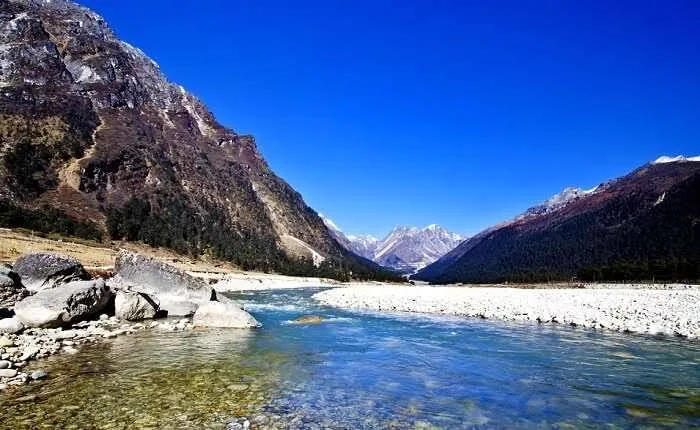
Spring is the season most North Sikkim visitors specifically plan around: the Yumthang Valley bloom. The Shingba Rhododendron Sanctuary at Yumthang holds over 40 species at 3,564 metres. Because of the altitude, the bloom here peaks later than West Sikkim: late April to mid-May, not March. On a clear April morning, the valley floor turns pink, orange, red, and white simultaneously across multiple species.
Zero Point (Yumesamdong) at 4,600 metres becomes accessible from May onward once the winter snow recedes. This varies by year and can shift by two to three weeks in either direction; ask your Gangtok operator about current road conditions before booking.
Saga Dawa (May 31, 2026): Sikkim’s most significant Buddhist festival marks Buddha’s birth, enlightenment, and death. The main procession through Gangtok, centred on Tsuklakhang Palace Monastery, is the largest religious gathering in the state’s calendar. For April-May visitors, this is worth timing around.
Nathu La Pass and Tsomgo Lake permits reopen in March after the winter closure. The Tsomgo Lake permit process was decentralised in 2025; permits can now be arranged from district tourism offices, not only the central Gangtok office. The lake surface thaws from its winter freeze, and the surrounding hillside fills with primulas and early blooms.
Gangtok in spring is comfortable: 18-22°C in the day, cool at night. March and early April give better Kanchenjunga views from Pelling than May, when pre-monsoon haze starts building from the south.
Winter: December to February
December brings the first snowfall to Gangtok. The city doesn’t get heavy snow most years, but light snowfall on MG Marg and the surrounding ridges happens reliably in December and January. Temperatures drop to 2-5°C at night in January. The closest Gangtok gets to a proper winter snow experience, this draws visitors specifically for it. Timing a visit for late December through mid-January gives the best odds of catching snow on the streets.
Losar (February 18, 2026): The Tibetan New Year opens a 15-day celebration through March 4. Rumtek Monastery and Phodong Monastery are the primary venues. If you are visiting Sikkim in February, plan around this.
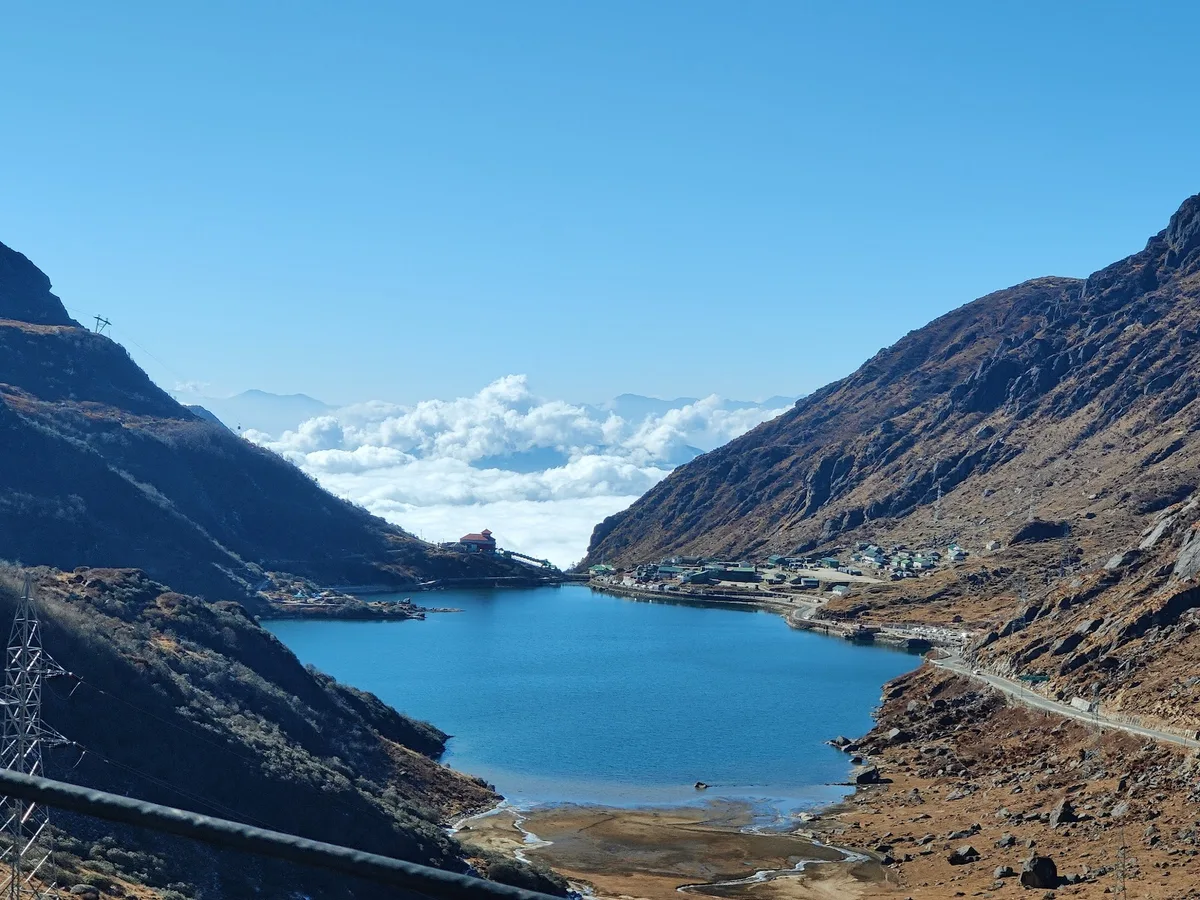
Tsomgo Lake freezes completely between December and February. The lake shore viewpoint is accessible when the road is clear, but heavy snowfall can close the Gangtok-Tsomgo route for days at a stretch. Nathu La Pass closes from November through February and is not open to tourists in this period regardless of weather.
North Sikkim closes fully. The road to Lachung is impassable after early December. Pelling and Ravangla in West and South Sikkim stay accessible throughout winter. Pelling nights fall to 5-8°C but the views on clear days can be exceptional, and crowds thin sharply compared to autumn. Pemayangtse Monastery and the Rabdentse Ruins are quiet in January.
Monsoon: June to September
The monsoon reaches Sikkim in June. Gangtok receives around 3,200 mm annually, and the mountain roads take a beating from June through September. Landslides are common on the NH10 corridor through the Teesta valley and on the routes into North Sikkim. A drive from NJP to Gangtok that takes 4-5 hours in dry season can stretch to 6-8 hours in monsoon after road blockages.
Tourist numbers drop sharply. Hotel rates fall 40-50% compared to peak season. The entire state turns intensely green. Waterfalls along every hillside road run at full force.
The practical constraints: North Sikkim routes are unreliable. Nathu La is frequently inaccessible due to road damage. The Gangtok-Tsomgo road can close after significant rainfall. For travellers who want to base in Gangtok and take day trips to Rumtek Monastery, Banjhakri Falls, and Enchey Monastery, monsoon is manageable. For anyone planning the full circuit with North Sikkim and Pelling, wait for October.
Permit and Access Information: 2026 Updates
Rs. 50 Sustainable Tourism Entry Fee (from March 14, 2025): All tourists entering Sikkim now pay Rs. 50 per person. This is collected at hotel check-in, not at a border post. Valid for 30 days or until exit, whichever comes first.
North Sikkim PAP (Indian nationals): Must be arranged through a registered tour operator in Gangtok; no self-drive or solo travel permitted. Minimum 2 nights/3 days in North Sikkim. Book at least 15 days ahead during peak season (April-May, October). Government permit fee is minimal (approximately Rs. 100-200); operator service charges are additional.
Digital PAP/RAP for foreign nationals (from January 12, 2026): Physical paper permits are abolished. Foreign visitors now apply through India’s e-FRRO portal with passport scans and itinerary; processing takes 24-48 hours with QR-code permits issued and scanned at army checkpoints. Foreign nationals cannot visit Nathu La, Zero Point, or Gurudongmar Lake regardless of permit status.
Nathu La Pass: Open Wednesday, Thursday, Saturday, and Sunday only; closed Monday, Tuesday, and Friday, plus closure dates for Special Border Personnel Meetings (September 15 and October 1 in 2025; check current year). Army weather clearance required regardless of scheduled open days, so closures can happen without notice.
Tsomgo Lake: Permit required; arranged through tour operators or district tourism offices. No separate entry fee: cost is included in vehicle permit packages.
Silk Route/Zuluk (Inner Line Permit): Open March to November. Road conditions make it impractical December-February.
For the plain-language guide to permits (documents required, how to avoid the half-day wait at the permit office), see the permits section of our Sikkim travel guide.
Sikkim Weather at a Glance
| Season | Months | Gangtok Temp | What’s Open |
|---|---|---|---|
| Spring | Mar-May | 18-25°C day, 8-15°C night | Lachung/Yumthang (timed crossing); Nathu La and Tsomgo from March |
| Monsoon | Jun-Sep | 18-23°C day, 14-18°C night | Gangtok and South/West Sikkim reliable; North Sikkim routes risky |
| Autumn | Oct-Nov | 18-22°C day, 8-12°C night | Lachung/Yumthang open; Nathu La and Tsomgo active; Pelling best views |
| Winter | Dec-Feb | 8-14°C day, 2-5°C night | Gangtok, Pelling, South Sikkim; North Sikkim and Nathu La closed |
Explore all Sikkim destinations and use Axomor’s trip planner to build your route around the season that fits your plans.

Written by
Kundan GuptaWrites from Assam. Checks fares and fees in person before publishing.
Kundan Gupta runs Axomor and edits its Northeast India coverage. He is responsible for the accuracy of the guides published here, including checking permit rules, fees and travel logistics against primary sources before they go live.
Ready to plan this trip?
Use Axomor's free trip planner to build your custom Northeast India itinerary, with distances, permits, and the best time to visit each spot.