

Most guides to Assam describe a circuit: Guwahati, Kaziranga, Majuli. All of it unfolds across the Brahmaputra Valley, flat and river-heavy. Haflong sits in an entirely different geography. At 680 metres in the Dima Hasao hills, it is the only hill station in Assam, built along a ridge above pine forest and a quiet lake. The surrounding area is home to the Dimasa, Zeme Naga, Hmar, and Kuki communities, with a cultural texture that has nothing to do with the Brahmaputra Valley mainstream.
This guide covers the actual Haflong tourist places worth the trip, with some corrections to information that keeps circulating in travel articles: the hill railway myth, the wrong waterfall, and a bird phenomenon that is not, in fact, a mystery.
Haflong Lake and the New Eat Street
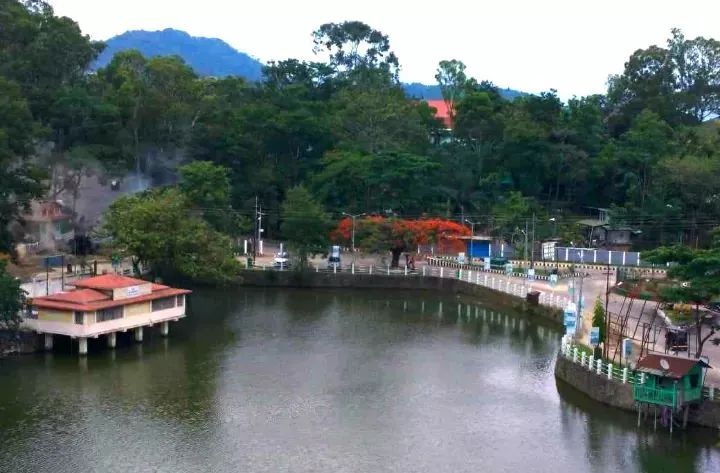
Haflong Lake sits just below the main market ridge, covering roughly 2.5 sq km. The lake is fed by hill streams and ringed by pine and broadleaf forest, with forested slopes rising on three sides. Pedal boating is available during daylight hours. Early morning, before the mist lifts from the surrounding hills, is the best time to be on the water. Late afternoon light is also good.
Eat Street Haflong opened in December 2024 on the lakeside. Developed by the Dima Hasao Autonomous Council, this is a new food and leisure strip: a lit walkway, murals depicting Dimasa tribal heritage, food stalls, a selfie point, and a fishing zone. It is the first properly social gathering space in Haflong, now the main evening destination for locals and visitors. It does not appear in any older travel articles.
From the lake, the Ouguri Hill View Point, accessible by road or a short walk from town, gives wide-angle views across the valley toward Meghalaya and the Barail Range. Dawn and late afternoon are the right times to visit.
Maibong: The Ruins of a Dimasa Capital
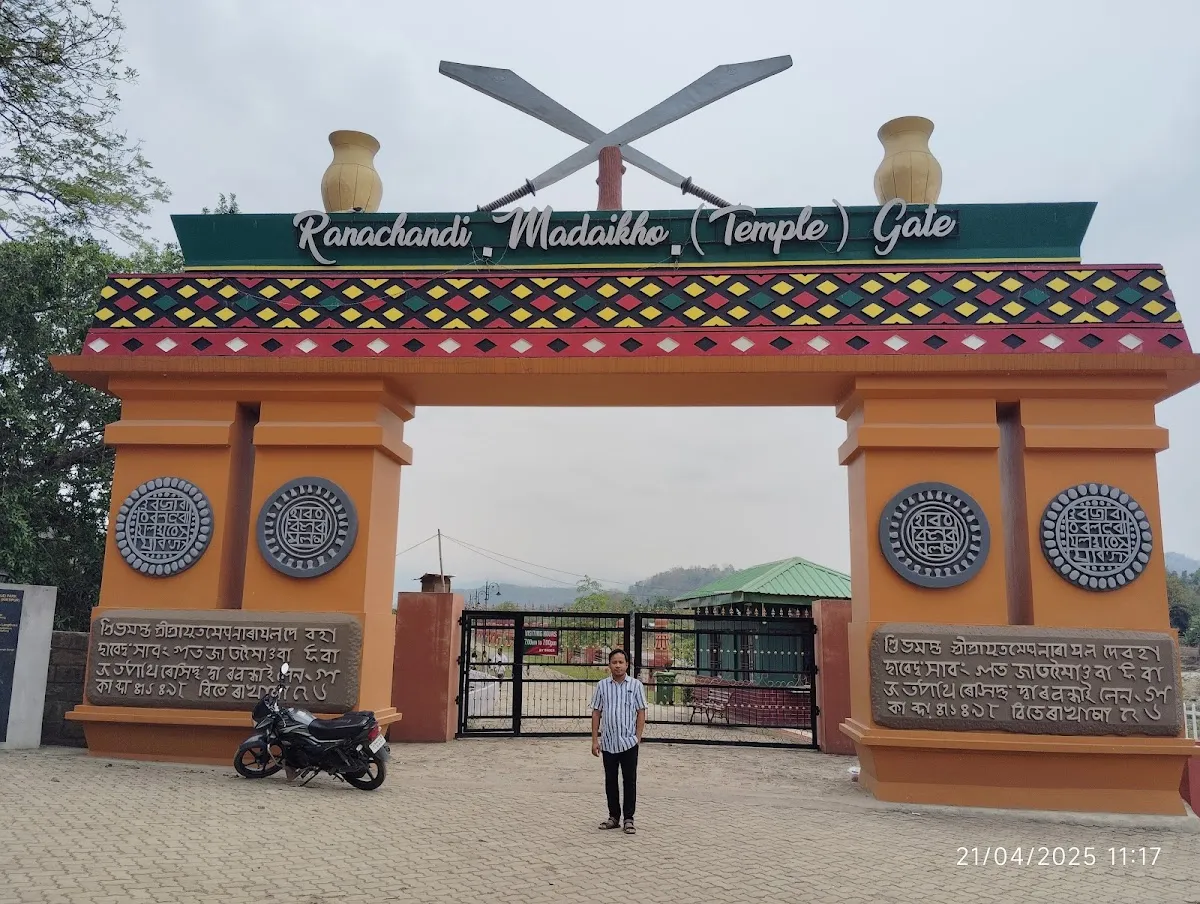
Maibong is approximately 45 km from Haflong, on the banks of the Mahur River. It was the capital of the Dimasa Kingdom in the 16th-17th centuries before the kingdom fell. Few guides give this more than a sentence. It deserves more.
What survives: The Stone House (Longthai ni Noh in Dimasa), a two-storied royal structure built from carved sandstone, believed to be mortarless construction. More remarkable is the Ramchandi Temple: a two-roofed temple chiselled from a single large boulder. Not assembled from quarried blocks, but carved directly from one rock. Stone inscriptions, historic tanks, and scattered monoliths on the eastern bank of the Mahur round out the site.
The site is open and unguarded. No entry fee, no ticketing, no facilities. The approach road is mountainous. A sturdy vehicle is recommended. Allow 1.5-2 hours each way. A two-night stay in Haflong makes Maibong a comfortable day trip; attempting it with only one night is rushed.
Jatinga Valley: The Bird Phenomenon That Is Not a Mystery
Jatinga Valley is 9 km from Haflong. Every year, from late August to October, on dark moonless nights with north-easterly winds and fog, 44+ species of birds become disoriented and fly toward artificial lights in a specific corridor: 1.5 km long, 200 m wide, active between 6 PM and 9:30 PM.
Most travel articles call it an “unsolved mystery.” It is not. The established scientific explanation: fog and high-altitude winds disorient juvenile migrants. Their navigation fails, they seek light as refuge. Ornithologist Salim Ali and naturalist E.P. Gee documented and explained this in the 1960s. The “mass suicide” framing in travel writing is inaccurate; the birds are confused, not suicidal. Species documented include black bittern, tiger bittern, pond heron, Indian pitta, kingfishers, green pigeon, and necklaced laughingthrush, among others.
For the bird phenomenon specifically, visit in the August-October window and on dark nights; the phenomenon does not happen on bright moonlit nights. For a general Jatinga day trip, the Changsu Punji Waterfall (6-7 km from the village) makes the area worth the short drive year-round.
The Jatinga Bird Watching Centre functions as the main ecotourism infrastructure for the valley.
Getting to Haflong
By train (recommended): Northeast Frontier Railway operates a Guwahati-New Haflong Vistadome service on Wednesdays and Saturdays. Departs Guwahati at 6:35 AM, arrives New Haflong at 11:55 AM: 269 km through hill terrain in 5.5 hours. The return departs at 5 PM. Book in advance; it runs at high occupancy.
Note: many older guides describe Haflong’s “narrow-gauge hill railway” as a scenic attraction. That railway was converted to broad gauge around 2014-2016. The old metre-gauge trains no longer run. The Vistadome is the current scenic train experience.
By road from Guwahati: 320 km, approximately 5-6 hours on NH-27 to Lumding then NH-306 through the hills. Verify road conditions before travel: the Haflong-Silchar section of NH-306 is prone to landslides, particularly June-September, and has been cut off for extended periods in both 2024 and 2025. From Silchar: approximately 98 km, 3-4 hours.
By air: No airport at Haflong. Silchar’s Kumbhirgram Airport (IXS) is the nearest, approximately 150 km south. Guwahati (GAU) is 320 km north.
Best Time to Visit
| Period | Conditions |
|---|---|
| Oct-March | Best: cool and clear, 12-22°C, views unobstructed |
| April-May | Warm but still pleasant |
| June-Sept | Avoid: heavy rain, road closures, landslides |
The Haflong Festival in October features Dimasa, Zeme Naga, and Hmar cultural performances. The Busu Festival (Dimasa new year) falls around January 27 and is the grandest celebration of the district’s largest community. The Judima Festival in December celebrates traditional Dimasa rice wine. None of these requires advance booking to attend as a visitor.
Where to Stay
Haflong has no luxury properties. The range runs from budget homestays at roughly Rs 1,000/night to mid-range hotels at Rs 2,500-3,200. Some homestays offer cultural immersion with Dimasa families. The town is small and hotels fill fast since the Vistadome train launched. During October-February, book in advance.
Practical Notes
Road connectivity is genuinely fragile. Landslides cut both road and rail links between Haflong and Silchar multiple times in 2024-2025, with extended closures. Verify road status before booking anything. Maintain buffer days in your itinerary.
Cash. There are ATMs in Haflong town, but Dima Hasao hill villages and most attractions have no facilities. Carry sufficient cash for the full trip.
Two nights minimum. Haflong Lake and the viewpoints cover one day. Maibong or Jatinga (or both) fills the second. One-night visits leave the most interesting part unseen.
Plan Your Haflong Trip with Axomor
Haflong connects naturally into a southern Assam circuit: Guwahati or Lumding (by train) to Haflong, then Silchar as the exit point southward toward Mizoram or back by air. For the full Assam picture, read our Best Places to Visit in Assam guide. Explore all Assam destinations on Axomor.
The Dima Hasao hills are quieter than the rest of northeast Assam’s tourism circuit. That will not last indefinitely as the Vistadome train makes them easier to reach.

Written by
Kundan GuptaWrites from Assam. Checks fares and fees in person before publishing.
Kundan Gupta runs Axomor and edits its Northeast India coverage. He is responsible for the accuracy of the guides published here, including checking permit rules, fees and travel logistics against primary sources before they go live.
Ready to plan this trip?
Use Axomor's free trip planner to build your custom Northeast India itinerary, with distances, permits, and the best time to visit each spot.