
Start with the thing almost every other Nagaland travel guide still gets wrong: as of 2025, you need an Inner Line Permit even to land in Dimapur. For decades Dimapur was the one ILP-free entry point in the state, and most older guides and cab-company pages still repeat that. It is no longer true. Get this right before you book, because it is the difference between a smooth arrival and an argument at the airport.
Nagaland is the most distinct corner of an already distinct region: 17 major tribes, a former headhunting culture now folded into one of the most Christian societies on earth, war history that turned the tide of the Second World War, and a valley of wild lilies that blooms for two weeks a year. Axomor has catalogued 250+ places across Northeast India, and Nagaland is the one that most rewards travellers who come for people and history, not just scenery.
Permits: The 2025-26 Changes You Must Know
Indian citizens need an ILP, including for Dimapur. Apply online only, at the official portal ilp.nagaland.gov.in; offline counters are gone. In May 2025 the Dimapur DC extended ILP to Dimapur district, with domestic tourist fees around Rs 200 for 30 days. Tourist validity generally runs 15 to 30 days, extendable at the DC’s office. Carry your ILP even when flying into Dimapur.
Foreign nationals need a Protected Area Permit (PAP) again. The relaxation that let foreigners skip the PAP was revoked by the Home Ministry in December 2024. As of 2026, all foreign nationals need a PAP to enter Nagaland and must register with the district FRO within 24 hours of arrival via the e-FRRO portal. Citizens of Afghanistan, China and Pakistan need prior clearance. These two reversals, ILP for Dimapur and PAP for foreigners, are the freshest and most important facts for any 2026 trip.
How to Reach Nagaland
Dimapur is the only airport and the only railhead in the state, so it is everyone’s gateway. From Dimapur, the capital Kohima is about 68 to 74 km on the NH-29 hill highway. Map apps say under 90 minutes, but the realistic drive is 2.5 to 3 hours with the gradient and chronic road works.
Distances stretch out fast in the hills. Kohima to Mokokchung, the Ao heartland, is around 145 km and roughly 5 hours. Kohima to Mon, the Konyak country in the far north, is a long 280 to 330 km haul of 8 to 12 hours on rough roads, so plan an overnight and do not trust the optimistic map estimate.
Top Places to Visit in Nagaland
Kohima and the War Cemetery
Kohima is the hill capital and the natural base. The Kohima War Cemetery commemorates the Battle of Kohima in April 1944, “the Stalingrad of the East,” where a small British-Indian force held off a far larger Japanese advance in the fighting that turned the war in the region. It holds 1,420 Commonwealth burials, and the 2nd British Division memorial bears the famous Kohima Epitaph: “When you go home, tell them of us and say, for your tomorrow, we gave our today.” It is one of the most moving sites in the Northeast.
Dzukou Valley
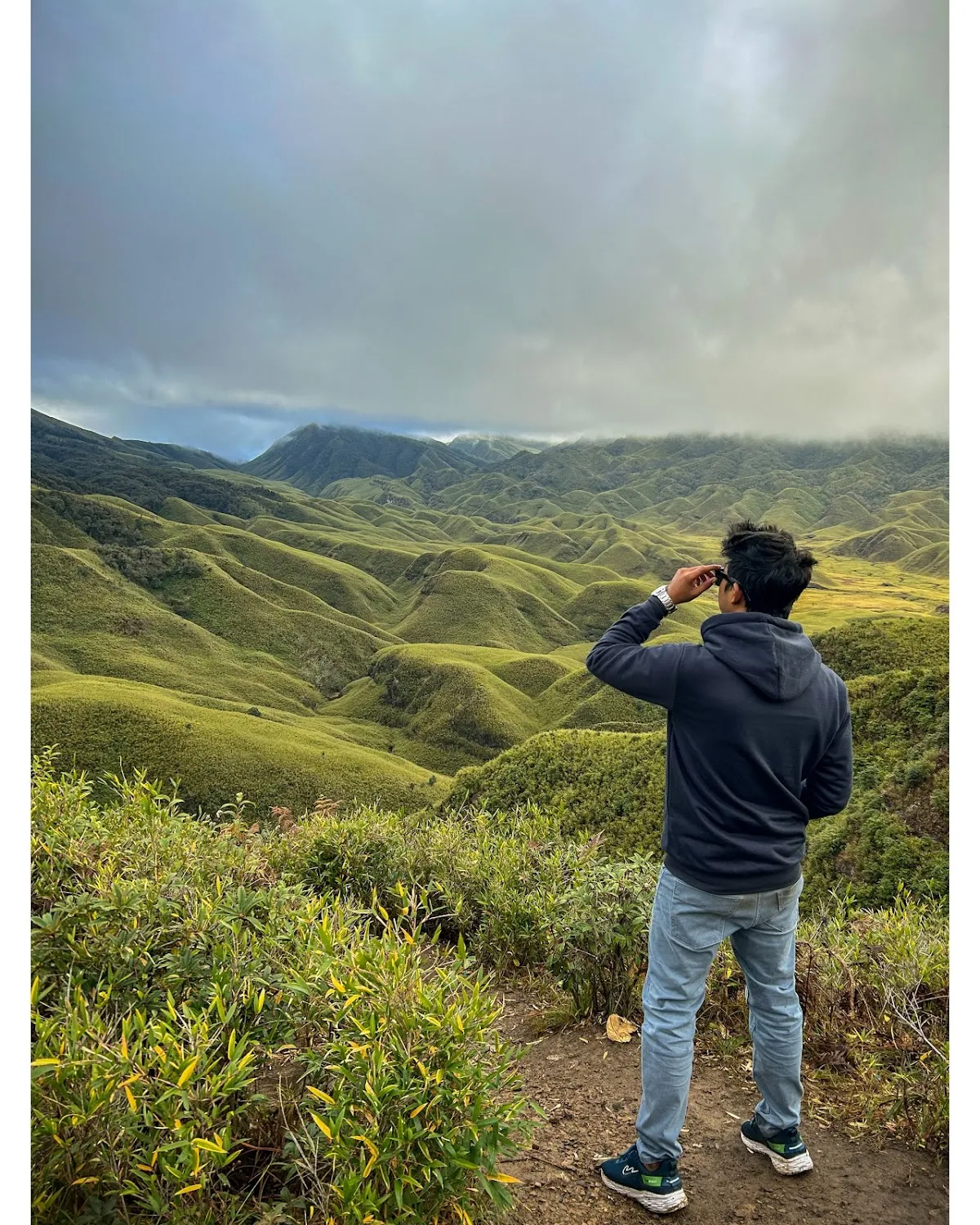
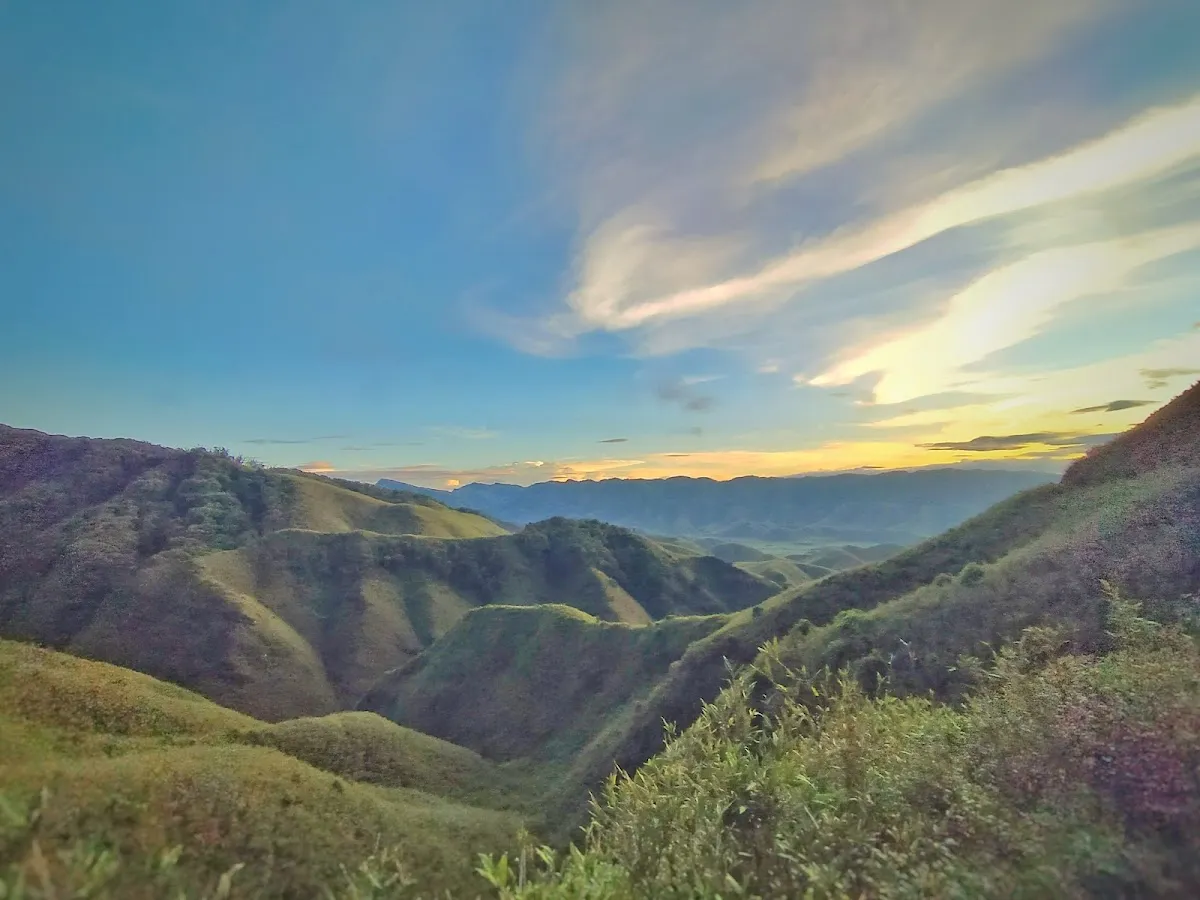
The Dzukou Valley is Nagaland’s signature trek, a green rolling floor at about 2,438 metres straddling the Nagaland-Manipur border. The endemic Dzukou lily blooms with the monsoon, peaking in the first two weeks of July, while the broader green-valley season runs June to September. Two trailheads serve it: Viswema (steeper, shorter) and Jakhama (longer, more gradual). A small entry fee is charged at the gate, and guides run roughly Rs 800 to 1,200. One 2026 note: a January wildfire damaged the route, which reopened in February 2026, so check current trail status before you set off.
Khonoma, Asia’s First Green Village
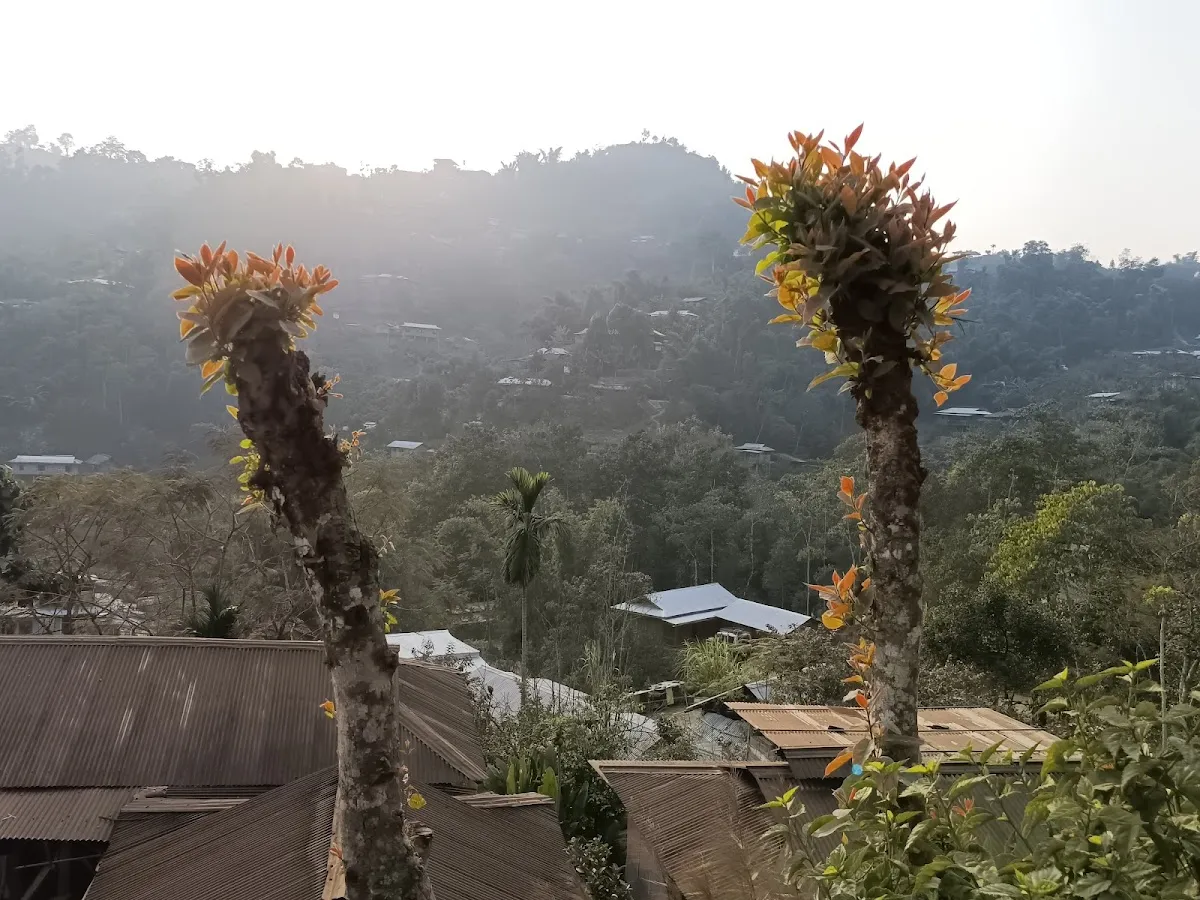
Khonoma, an Angami village about 20 km from Kohima, banned hunting and logging in 1998 and created a community conservation area protecting the rare Blyth’s Tragopan. It was recognised as India’s first “green village” in 2005. It is also a historic warrior village that resisted the British, and it runs welcoming community homestays.
Mon and the Konyak Villages
In the far north, Mon district is the land of the Konyak, the last generation of tattooed former headhunters. The border village of Longwa is famous for the Angh’s (chief’s) house, which the India-Myanmar boundary runs straight through: locals say you eat in Myanmar and sleep in India. Headhunting ended in India around 1960, and the tattooed elders are now revered as living historians. Treat the history respectfully and in the past tense.
The Hornbill Festival
If you can time your trip, the Hornbill Festival runs 1 to 10 December 2026 at the Kisama Heritage Village, about 10 km from Kohima, bringing together all the major Naga tribes for cultural dances, indigenous games, the traditional morungs, and night carnivals in Kohima town. Entry passes are inexpensive, bought fresh each day. We cover it in full in our dedicated Hornbill Festival 2026 guide, including how to plan around the crowds.
Tribes, Faith and Food
Nagaland has 17 major tribes, among them the Angami, Ao, Konyak, Sumi, Lotha and Chakhesang, each with its own language, dress and morung, the communal house where youth once learned crafts, custom and oral history.
The state is overwhelmingly Christian and majority Baptist, which has a practical effect on travel: Sundays are widely observed, and many shops, restaurants and transport services close. Plan your logistics around that.
Naga food is bold and smoky. Look for smoked pork with axone (fermented soybean, deep and umami) or with bamboo shoot, and brace for the Raja Mircha, the king chilli, one of the hottest in the world and native here. Note that Nagaland remains officially a dry state under the 1989 prohibition law, which is under review but not repealed as of 2026, so alcohol is officially banned and unreliably available.
Best Time to Visit Nagaland
- October to May: the good window. Dry, clear, cool, with the best roads.
- December: the Hornbill Festival, plus the coldest and most crowded stretch in Kohima.
- June to September: monsoon, with landslide risk, but the only window for Dzukou’s green carpet and the July lily bloom.
Two cultural festivals worth catching: Sekrenyi of the Angami, around late February 2026, and Moatsü of the Ao, in early May 2026. Both follow the agrarian calendar, so confirm exact dates locally.
Practical Notes Most Guides Skip
- Book Hornbill accommodation months ahead. Kohima and nearby villages fill up by August or September for December, and prices surge. If you miss out, stay in Dimapur and commute.
- Homestays are the authentic option in Khonoma, Longwa and Touphema, and often the only one. Book ahead and carry cash.
- ATMs are sparse outside Kohima and Dimapur. Withdraw plenty before heading to Mon or Longwa, and remember banks close on Sundays.
- Network thins out fast toward the border districts. Jio and BSNL are the most usable; expect little to no signal in remote areas.
Plan Your Nagaland Trip with Axomor
Nagaland works as its own trip or as the cultural heart of a wider Northeast route. Time it for the Hornbill Festival if you can, and read our Hornbill Festival 2026 guide to do it well. Browse all Nagaland destinations on Axomor to build the rest of your route.
Come for the war history, the green valleys and the morungs, but stay for the people. Few places in India hold their traditions as openly, or as proudly, as Nagaland does.
Ready to plan this trip?
Use Axomor's free trip planner to build your custom Northeast India itinerary, with distances, permits, and the best time to visit each spot.