

The Hornbill Festival Nagaland 2026 runs December 1-10 at Kisama Heritage Village, 12 km from Kohima. The 2026 edition will be the 27th, making it old enough to have spawned imitations across Northeast India but still the original: ten days of competitive tribal dance, traditional games, the country’s fiercest live rock band competition, and 17 tribes gathered under one site in full regalia.
The 2025 festival drew 2,14,493 visitors. For context, 2019 peaked at 2.82 lakh before the pandemic collapsed attendance for several years. Recovery is real but not yet complete. The festival is still achievable without fighting massive crowds if you time your days carefully.
What the Hornbill Festival Actually Is
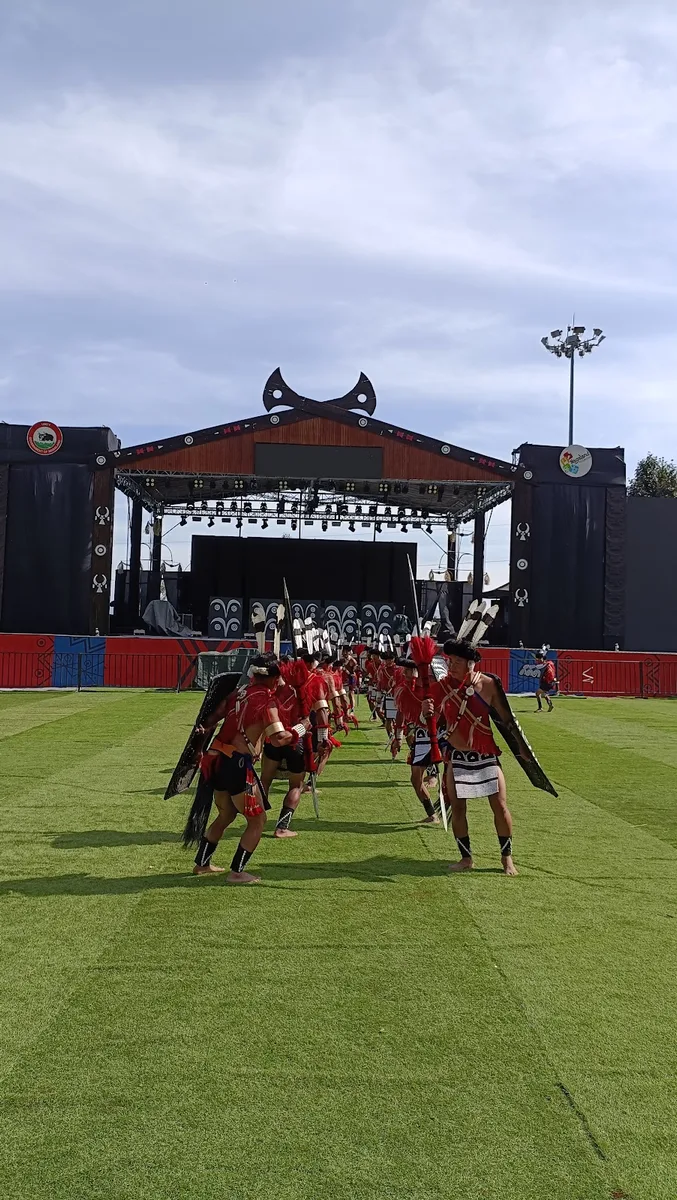
The festival’s name explains one thing: the hornbill (Buceros bicornis) is Nagaland’s state bird and sacred to Naga culture. Its feathers appear in the ceremonial headgear of warriors and chieftains. The festival was started in 2000 by the state government to revive, showcase, and preserve Naga cultural traditions in one concentrated event.
Kisama Heritage Village was purpose-built for the festival. The name comes from the two villages that donated the land: Kigwema and Phesama. The site has 18 morungs, one for each of Nagaland’s 17 recognized tribes and one for the Garo community. A morung is historically the nerve center of a Naga village, where young men learned warfare, community law, and collective living. At Kisama, each morung is constructed in traditional style, with bamboo and wood architecture, carved tigers and hornbills at the entrances, and a central fire with smoked meats hanging above. They are positioned across the site to roughly mirror Nagaland’s geographic map.
The word “Kisama” itself is a portmanteau of land donations from Kigwema and Phesama villages. Almost no travel blog mentions this.
Days 1-10 structure: Mornings are for tribal culture. The open-air amphitheater hosts warrior dances, harvest songs, and folk music from all 17 tribes in full traditional dress. Alongside the performances: Naga wrestling (tsukhenye), stone-pulling competitions, indigenous archery contests, a traditional horn-blowing competition, and a tattoo competition (particularly focused on Konyak elders, who carry the last facial tattoos from a tradition now largely stopped). The Miss Nagaland pageant and flower show are part of the official programme.
Evenings shift to music. The Hornbill International Rock Contest is India’s most competitive live band competition, drawing entries from across the country and internationally. The Hornbill Music Festival runs in parallel with mainstream and NE artists. Gates open at 9 AM daily.
Entry fee: Approximately INR 20-30 per day for general entry. Professional camera fee: INR 50 additional. Concert and special event passes are separate.
Getting There
By air: Dimapur Airport (DMU) is the main gateway, 74 km from Kohima. IndiGo and Air India connect Dimapur to Delhi, Kolkata, and Guwahati. From Dimapur, shared taxis and private cabs run to Kohima (2 hours, INR 250-400 per seat shared).
By rail: Dimapur Railway Station is the only railhead in Nagaland. Trains connect from Guwahati (the main regional hub). Transfer to a shared cab at Dimapur for the Kohima leg.
By road from Guwahati: 440 km, approximately 9-11 hours on NH-27 to Dimapur then NH-29 to Kohima. Scenic but slow through the hill section.
ILP for Nagaland
Every Indian citizen who is not a Nagaland resident needs an Inner Line Permit. Apply at ilp.nagaland.gov.in. Since January 2025, the process is fully online only and Aadhaar-mandatory. Paper ILPs are no longer issued.
Current fee (as of 2025): INR 200 for a 30-day permit, a steep increase from prior rates that drew public criticism when it came into effect in September 2024. Apply at least 3-4 days before travel; the system occasionally experiences delays during peak festival periods.
Foreign nationals need a Protected Area Permit (PAP). The Central Government issues a 10-day PAP relaxation specifically for the Hornbill Festival period (December 1-10), which is applied for through registered tour operators. In 2025, six country partner delegations (UK, Ireland, France, Switzerland, Austria, Malta) attended under this arrangement.
A common misconception in older guides: the ILP was NOT removed for domestic tourists. It is now stricter and more expensive than it was before 2024.
Where to Stay
Festival accommodation fills fast. Book by late September 2026 for December 2026.
On-site / near Kisama: An eco-camp is set up annually at Kigwema village, 1 km past Kisama. Basic bamboo huts, atmospheric, popular with backpackers. This sells out in October. Also check JustGoCamping (lists on Booking.com during festival season).
Kohima hotels: The Heritage Hotel, De Oriental Grand, and Razhu Pru are the established mid-range options. TUTC’s Kohima Camp is the luxury tented camp option. Budget homestays from INR 800-1,500/night; mid-range INR 2,500-5,000. Prices spike 2-3x during December 1-10.
Staying in Kohima is practical; shared cabs to Kisama run throughout festival days. Staying at the eco-camp means waking up 1 km from the venue, which is worth the basic facilities.
Beyond the Festival: Kohima
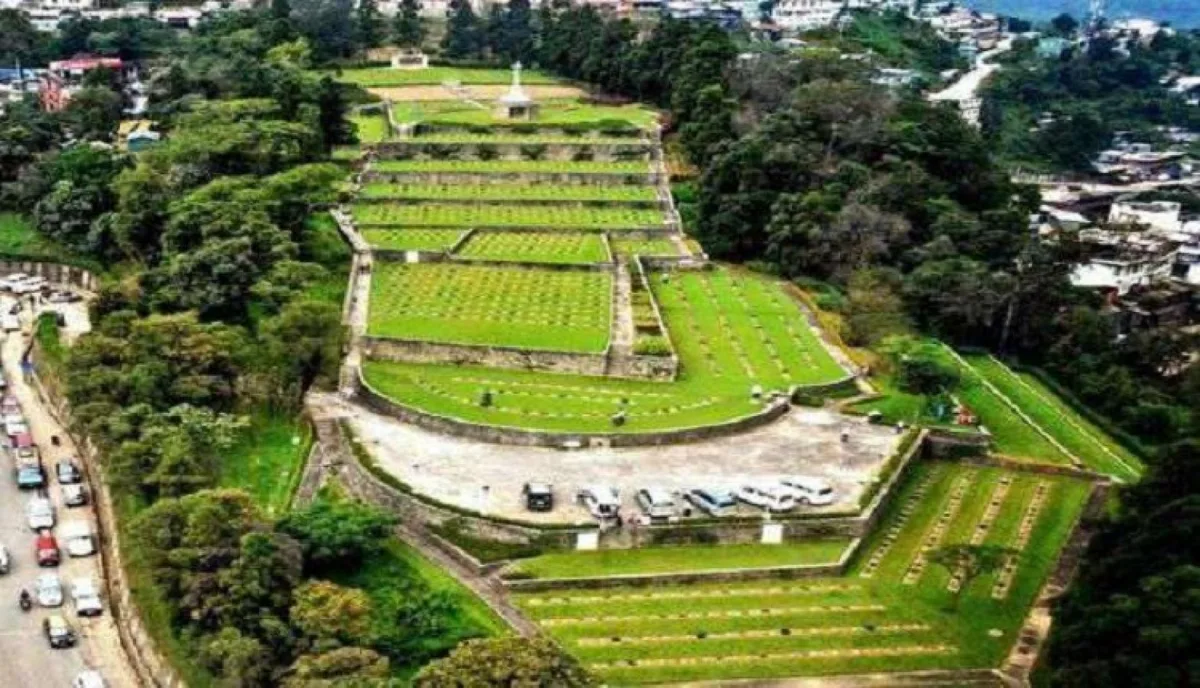
The Kohima War Cemetery is 1.4 km from the state museum in central Kohima. It holds 1,420 Commonwealth graves from the Battle of Kohima (April-June 1944), one of the decisive engagements of the Burma Campaign. More than 15,000 Japanese soldiers were held back here by 2,500 British-Indian troops for 16 days before relief arrived. In 2013, the British National Army Museum voted the combined Kohima-Imphal battle “Britain’s Greatest Battle.” The fighting’s most brutal phase took place on the tennis court of the Deputy Commissioner’s bungalow, whose outline is marked in the cemetery today. The epitaph: “When you go home, tell them of us and say, for your tomorrow, we gave our today.”
One of the least-known WW2 sites in India. Worth half a morning regardless of why you are in Kohima.
Kohima Market (Naga Bazaar): Sells smoked meats, fermented bamboo shoots, snails, edible insects, silkworms, honey bee larvae, local mushrooms, and fresh Bhut Jolokia (king chilli) in multiple forms. One of the few markets in India where edible insects are sold at mainstream stalls. Most active in the mornings.
What About Dzukou Valley?
The Dzukou Valley trek (25 km from Kohima via Viswema village) is a commonly cited add-on for Hornbill Festival visitors. In December, the trek is accessible: clear skies, no leeches, cold nights. The trail from Viswema on the Nagaland side is the recommended approach, better maintained than the Manipur alternative.
The important caveat: the Dzukou lily blooms in June and July, not December. If the flowers are the reason for your interest in the valley, that requires a separate summer trip. December offers the valley without the crowds that the bloom season brings.
Planning Notes
Festival dates are fixed by legislation at December 1-10 each year. No announcement is needed to confirm 2026 dates.
Best days: Opening day (December 1) and the last few days are typically the most attended. Mid-festival weekdays (December 3-7) have the most breathing room without losing much programming.
What the festival is becoming: The 2025 edition drew attention for growing inclusion of non-Naga cultural acts and Hindi film music at the performance stage, with local media questioning whether the festival is drifting from its stated purpose. These are real debates within Nagaland. The tribal performances and morungs remain the authentic core of the event; the evening concerts have become a separate entertainment product alongside them.
Plan Your Nagaland Trip with Axomor
The Hornbill Festival pairs well with a wider Nagaland circuit. From Kohima, the main destinations include Kisama Heritage Village, the War Cemetery, and the Dzukou Valley trek. For the full state picture, explore all Nagaland destinations on Axomor. For northeast India timing more broadly, see our Best Places to Visit in Assam and Best Places to Visit in Arunachal Pradesh guides.
The festival runs on the same dates every year. What changes is who performs, which country is the partner, and whether the evenings feel more like a cultural event or a music festival. The daytime tribal culture at the morungs has not changed significantly since 2000. That is the part worth going for.
December in the region

Written by
Kundan GuptaWrites from Assam. Checks fares and fees in person before publishing.
Kundan Gupta runs Axomor and edits its Northeast India coverage. He is responsible for the accuracy of the guides published here, including checking permit rules, fees and travel logistics against primary sources before they go live.
Ready to plan this trip?
Use Axomor's free trip planner to build your custom Northeast India itinerary, with distances, permits, and the best time to visit each spot.