
Meghalaya receives nearly 12 metres of rain a year in some places. That single fact shapes everything about when to go, what you will see, and how you get around. The best time to visit Meghalaya depends entirely on what you are there for: the waterfalls at maximum power, the crystal-clear river at Dawki, the root bridge hike, or the festivals that fill the hills in November.
This guide answers each of those questions separately, with actual temperature data for the three parts of Meghalaya that behave very differently from one another.
Quick Summary: Best Time by Purpose
| Purpose | Best Months |
|---|---|
| Overall best visit | October-November |
| Dawki river boat ride (clearest water) | November-March |
| Nohkalikai Falls at maximum | July-August |
| Nohkalikai with safe road access | October-November |
| Double Decker root bridge hike | October-April |
| Cherry Blossom Festival | Mid-November |
| Wangala and Nongkrem festivals | November |
| Caving (Mawsmai, Arwah) | October-May |
| Budget travel (lowest prices) | June-September |
| Fewest crowds | January-February |
Month-by-Month Breakdown
October-November: The Best Window
October is Meghalaya’s finest month. The monsoon has passed, the landscapes are at their most intensely green, and the waterfalls still carry strong post-monsoon flow. Roads reopen. Temperatures in Shillong sit around 23°C in the day and 14°C at night. Dawki’s river begins clearing toward its winter transparency.
November brings the festivals. The Cherry Blossom Festival (mid-November, Jawaharlal Nehru Stadium, Shillong) has turned November into the single busiest month in Meghalaya. Meghalaya’s Prunus cerasoides blooms in autumn, making this India’s only autumn cherry blossom event. The Nongkrem Dance Festival at Smit village (11 km from Shillong) happens in late October or early November: a five-day Khasi harvest ceremony with traditional dance, ceremony, and the Pomblang goat sacrifice ritual. The Wangala Festival of 100 Drums (Garo Hills, also November) is the Garo tribe’s post-harvest thanksgiving.
Practical note: Book accommodation 2-3 months in advance for November. The Cherry Blossom weekend in particular is now extremely crowded and hotels across the price range sell out weeks ahead.
December-February: Clear, Cold, Crystal Water
Winter is Meghalaya’s clearest season. Dawki’s Umngot River reaches peak transparency in December and January. On calm mornings the boats genuinely appear to float above the pebble bed with no visible water beneath them. Shillong temperatures drop to 5-7°C at night in January but remain pleasant in the daytime at 17-18°C.
Nohkalikai Falls shrinks to a fraction of its monsoon flow in this period. Some visitors find the “white rope” of water against the enormous gorge wall more photographic than the thundering monsoon version, where spray obscures the cliff face. Worth knowing before you go.
Christmas in Shillong is worth timing a visit around. The city has a large Christian community and the celebration is warm, local, and not yet overrun by tourism.
Crowds are lowest in January and February. Prices are good. The root bridge hike is at its most comfortable.
March-April: Spring and Festivals
March is Meghalaya’s least humid month. Cherrapunji starts warm (22-23°C) before the monsoon builds. The Dawki river is still clear. Root bridge conditions are excellent.
The Shad Suk Mynsiem Festival (“Dance of Joyful Hearts”) runs for three days in the first week of April at Weiking Ground, Shillong. Unmarried Khasi women in traditional silver jewellery and silk mekhela perform the thanksgiving dance. This is a genuine community celebration, not a tourism production.
Pre-monsoon showers begin building from April onward. Dawki water clarity can cloud on any given day from mid-April after rain. Plan the river visit earlier in the month if possible.
May-September: Monsoon Season
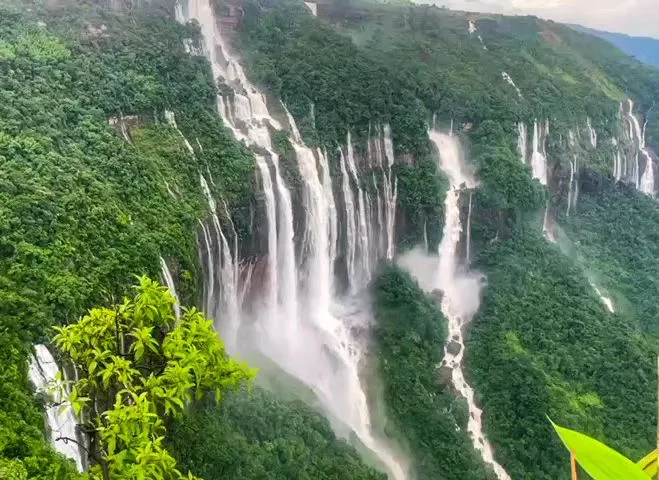
The monsoon arrives in Meghalaya in June and peaks in July, which is the wettest single month. Cherrapunji records its world-famous rainfall during these months. The July 1861 record of 9,300 mm in a single month still stands as the highest single-month rainfall ever recorded on Earth.
What this means in practice: Every waterfall is at absolute maximum force. Nohkalikai, the Seven Sisters Falls, Elephant Falls, Wei Sawdong, Dainthlen: all thundering. The landscape is unnervingly green. Clouds settle into valleys and sit there for days. The experience is dramatic.
The roads are a different matter. NH6 between Shillong and Guwahati has multiple landslide-prone sections with 2-6 hour wait times when blocked. The Shillong-Dawki road has a particularly dangerous stretch near Mawlieh that saw a fatal rockslide in 2025. The East Khasi Hills government issues formal monsoon travel advisories every year. The state government has committed to building a new Shillong-Dawki road by 2027 to address this problem.
Prices drop significantly in monsoon. Crowds are minimal. For adventurous travellers who accept the constraints (base in Shillong, take day trips only when roads are confirmed clear, skip the root bridge hike entirely), the monsoon is a legitimate way to experience Meghalaya. For first-time visitors, it is not recommended.
Behdienkhlam Festival (July, Jowai in Jaintia Hills) is one of the few compelling reasons to visit during monsoon. The Pnar tribe parade large wooden structures through Jowai in a ceremony meant to drive away disease and bring good harvest. It is one of Northeast India’s most visually distinctive festivals and almost never appears in mainstream travel guides.
Activity-by-Activity Best Times
Double Decker Living Root Bridge Hike
The 3,000-step descent to Nongriat and back up takes 4-6 hours. The stone steps are uneven, moss-covered, and permanently damp. Safe season: October to April. Best months: November to February when the steps are at their driest and temperatures make the climb manageable.
June to August: do not attempt. The steps become dangerous under monsoon conditions. Leeches are heavy on the trail. Streams cross the path and can swell without warning. The bridge itself is safe (it was built to rise above monsoon water levels) but the access path is the hazard. Some experienced trekkers with local guides attempt it in late September, but it carries genuine risk.
Dawki River Boat Ride
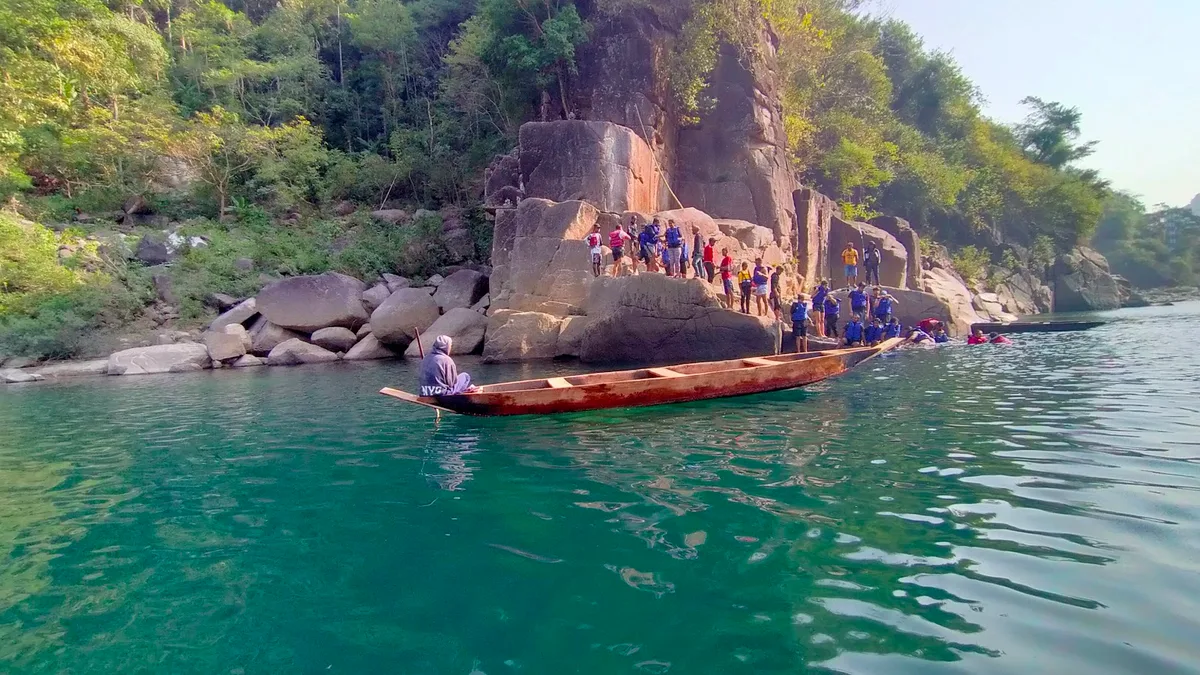
November to March is the peak transparency window. The “floating boats” effect is at its most photogenic.
One thing most guides miss: clarity depends on upstream rainfall, not just the month. Even in peak season, a heavy overnight rain can cloud the river for a day or two. Morning visits (7:30-10:00 AM) consistently give better clarity than afternoons, when tourist boat traffic disturbs the riverbed and light angle changes.
June to September: boating is frequently suspended. The river runs swollen and greenish-brown. There is no point going specifically for the river during this period.
Nohkalikai Falls
The falls reach peak flow in July-August when Cherrapunji’s monsoon rainfall feeds them. The volume is extraordinary: a wall of white water with constant roar. Road conditions are the constraint.
Best practical window: October-November. Flow is still impressive from post-monsoon runoff, the road is open, and you can actually approach the viewpoint safely.
December-February: The falls reduce to low flow. The height (340 m, India’s tallest plunge waterfall) is actually more visible in dry season when spray does not obscure the cliff face. A different experience, not necessarily lesser.
Mawlynnong Village
Mawlynnong is open year-round with one important new rule: as of January 2026, the village council has banned day tourists on Sundays. Overnight homestay guests are exempt. Plan your visit for Tuesday through Saturday. This is a very recent policy and will not appear in any other guide written before 2026.
Best months for weather: October-April. The village is lush in monsoon but paths become muddy and the famous cleanliness is harder to maintain in heavy rain.
Caves (Mawsmai, Arwah, Krem Liat Prah)
Safe season for all caves: October to May. Mawsmai Cave near Cherrapunji is a short (150 m), lit tourist cave that stays accessible in most conditions. Arwah Cave follows the same general rule.
Krem Liat Prah in the Jaintia Hills is a completely different matter. At nearly 31 km in length it is the longest cave in India. It requires permits and experienced guides. Absolutely avoid June to September: underground streams swell dramatically, flooding deep passages. This is an expedition cave, not a tourist attraction. Treat it as such.
A Note on Temperatures: Shillong vs. Cherrapunji vs. Dawki
Most “best time to visit Meghalaya” guides give a single temperature. Meghalaya has three very different climate zones within two hours of each other:
| Location | Altitude | Jan Daytime | July Daytime | Character |
|---|---|---|---|---|
| Shillong | 1,500 m | 17-18°C | 24°C | Cool hill city, temperate |
| Cherrapunji | 1,300 m | 18°C | 24°C | Similar to Shillong; wetter |
| Dawki | 60 m | 22°C | 29°C | Sub-tropical, warm year-round |
The practical implication: if you pack for Shillong’s January temperatures (cold nights, cool days) and then drive to Dawki the next morning, you will be overdressed. Dawki in January daytime feels like a warm spring day.
Festivals Calendar
| Festival | When | Location |
|---|---|---|
| Shad Suk Mynsiem | First week of April | Weiking Ground, Shillong |
| Behdienkhlam | July | Jowai, Jaintia Hills |
| Ka Pomblang Nongkrem (Nongkrem Dance) | Late October/early November | Smit village, 11 km from Shillong |
| Wangala (Festival of 100 Drums) | First-second week November | Garo Hills, Tura |
| Cherry Blossom Festival | Mid-November | Polo Grounds, Shillong |
Exact 2026 dates for Wangala, Nongkrem, and Shad Suk Mynsiem had not been confirmed by Meghalaya Tourism as of May 2026. The autumn events calendar is typically released in September-October. Check meghalayatourism.gov.in closer to your travel dates.
For more on where to go once you arrive, read our complete Meghalaya travel guide covering entry fees, permit requirements, and place-by-place advice.
Explore all Meghalaya destinations and use Axomor’s trip planner to build your itinerary around the season that works for you.

Written by
Kundan GuptaWrites from Assam. Checks fares and fees in person before publishing.
Kundan Gupta runs Axomor and edits its Northeast India coverage. He is responsible for the accuracy of the guides published here, including checking permit rules, fees and travel logistics against primary sources before they go live.
Ready to plan this trip?
Use Axomor's free trip planner to build your custom Northeast India itinerary, with distances, permits, and the best time to visit each spot.